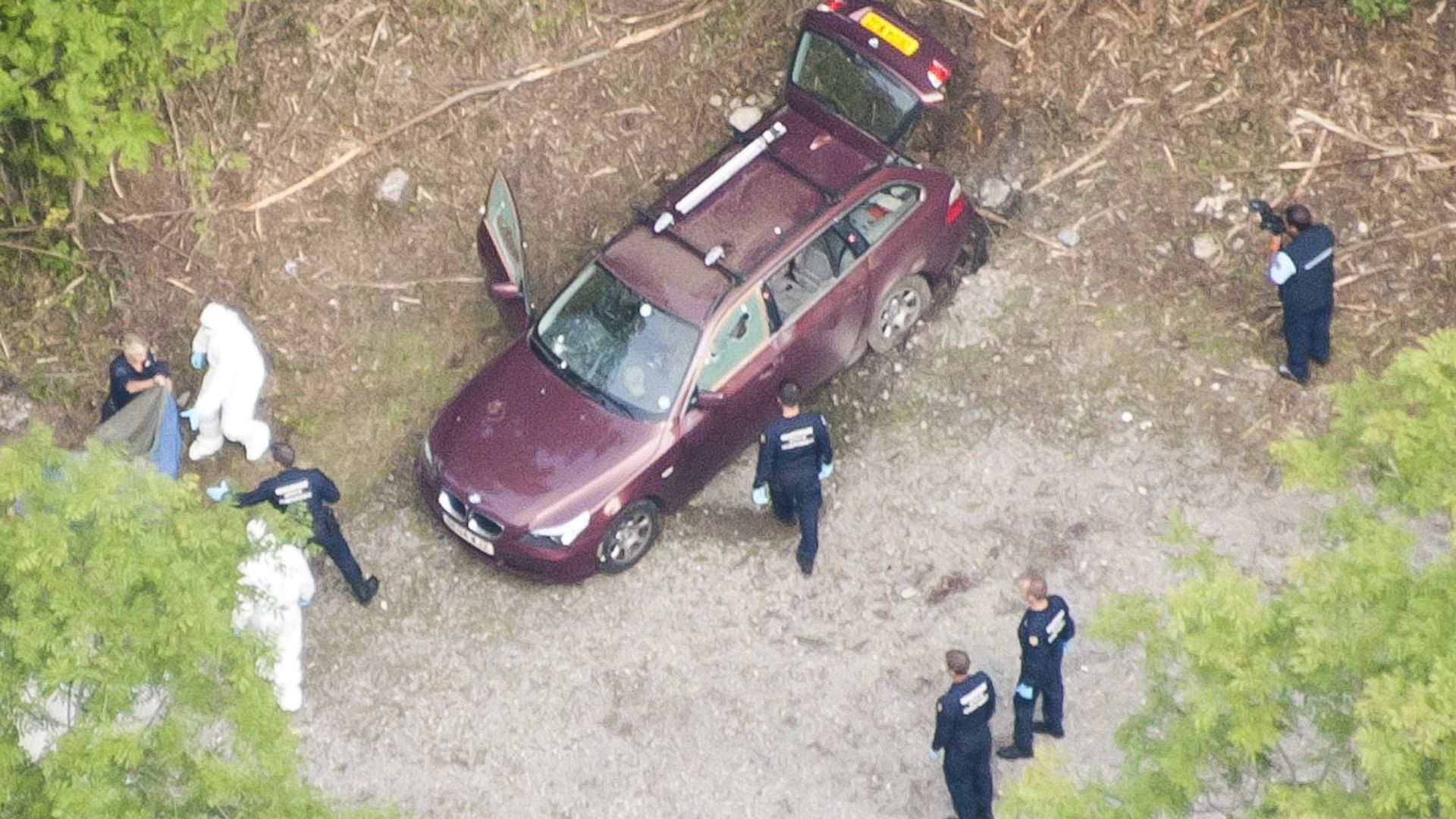
A vintage Luger P06 pistol pulled from the silty shallows of Lake Annecy has breathed unexpected life into one of Europe's most confounding cold cases, fourteen years after the execution-style slaughter of the al-Hilli family and a French cyclist in the shadow of the French Alps. British tourists swimming near the Solitaire du Lac campsite stumbled upon the corroded firearm on August 20, resting in less than two meters of water just miles from the secluded forest layby in Chevaline where Saad al-Hilli, his wife Iqbal, her mother Suhaila al-Allaf, and local welder Sylvain Mollier were brutally murdered on September 5, 2012.
The Nanterre cold-case unit, which took over the sprawling inquiry four years ago under investigative judge Sabine Kheris, faces a monumental forensic challenge. The weapon has spent over a decade submerged in mineral-rich alpine water, presenting severe degradation that complicates both DNA recovery and definitive ballistic matching. Yet, the firearm's precise provenance makes it impossible to ignore. Investigators previously established through shell casings and a fragment of a gun grip left at the scene that the perpetrator used a rare Swiss army-issue Luger P06 chambered in 7.65x21mm Parabellum. Over the past fourteen years, dozens of these vintage weapons have been checked and cleared by authorities, rendering this discovery the single most credible physical lead remaining in an investigation that has repeatedly stalled. Learn more on a related topic: this related article.
Cold cases rarely break through cinematic epiphanies. They grind forward through millimeters of rust, painstaking chemical restoration, and the slow erosion of alibis. When the al-Hilli family's BMW engine was found still running with its wheels spinning in the mountain mud, investigators inherited a chaotic puzzle box of competing theories. They chased rumors of secret bank accounts in Geneva, inherited feuds over Iraqi family wealth, aerospace engineering contracts, and accidental collateral damage centered on Sylvain Mollier. Every path ended in a dead end. The discovery of a military-grade antique in a heavily trafficked tourist lake forces a fundamental re-examination of how the weapon vanished and who had the local knowledge to hide it in plain sight.
Lake Annecy is one of the most heavily frequented bodies of water in eastern France. Thousands of swimmers, paddleboarders, and divers comb its shores every summer. That a weapon matching the exact specifications of the Chevaline murder weapon lay undisturbed in shallow water for over a decade speaks volumes about the limits of underwater searches and the sheer randomness of criminal investigations. Skeptics point out that military surplus firearms, particularly Swiss and German service pistols, occasionally resurface during droughts or construction projects across the region, remnants of wartime drops or private collections dumped decades ago. Further reporting by Al Jazeera highlights related perspectives on this issue.
However, the statistical coincidence of a Luger P06 matching the exact model used in a high-profile quadruple assassination ending up in the exact lake where the killer fled strains credulity. The layout of the Chevaline crime scene always suggested a killer with intimate knowledge of the local geography. The forest track offered only one way in and out by vehicle, yet the shooter vanished into the dense alpine terrain before first responders could bottleneck the area. Dumping a weapon into Lake Annecy requires neither sophisticated planning nor an aquatic salvage operation. A swimmer or someone wading from the packed shoreline could easily drop a heavy metal object into the silt, letting the lake swallow the evidence within seconds.
French legal representatives for the victims have urged caution, warning against premature euphoria. Experience dictates that long-submerged steel resists easy answers. Ballistic comparison relies on pristine microscopic striations left on bullets and cartridge casings. Fourteen years of aquatic oxidation can alter internal barrel surfaces beyond reliable identification, turning what looks like a miraculous smoking gun into an expensive forensic ambiguity. Furthermore, the likelihood of extracting viable touch DNA from a weapon steeped in lake sediment for a decade and a half borders on negligible, though modern laboratory techniques continue to defy historical expectations.
The firearm also revives an old debate regarding the profile of the assassin. Early theories divided investigators between the professional hitman hypothesis and the lone, disturbed gunman angle. The choice of a pre-World War II military sidearm long fueled arguments against a professional contract killing, as trained operatives rarely select vintage, mechanically finicky pistols with limited magazine capacities when modern alternatives are readily accessible. Yet, the precision of the grouping—twenty-five shots fired with lethal accuracy, mostly targeted at the head—pointed toward terrifying competence. A killer using an antique Luger does not automatically signal an amateur; it can just as easily represent a deliberate choice of an untraceable ghost gun stripped of modern serial registry ties.
As the weapon undergoes intensive analysis at specialized forensic laboratories in France, the psychological weight of the discovery presses heavily on the surviving members of the tragedy. The two al-Hilli daughters, who survived the onslaught—one struck over the head with the pistol after it jammed, the other hidden beneath her mother's body in the back seat—have grown into adulthood under the long shadow of an unresolved massacre. For them, and for the families of Sylvain Mollier, the rusted metal hauled from Lake Annecy represents the final, fragile threshold between permanent mystery and ultimate accountability. The lake kept its secret for fourteen years, but science and time are running out for the ghost behind the trigger.