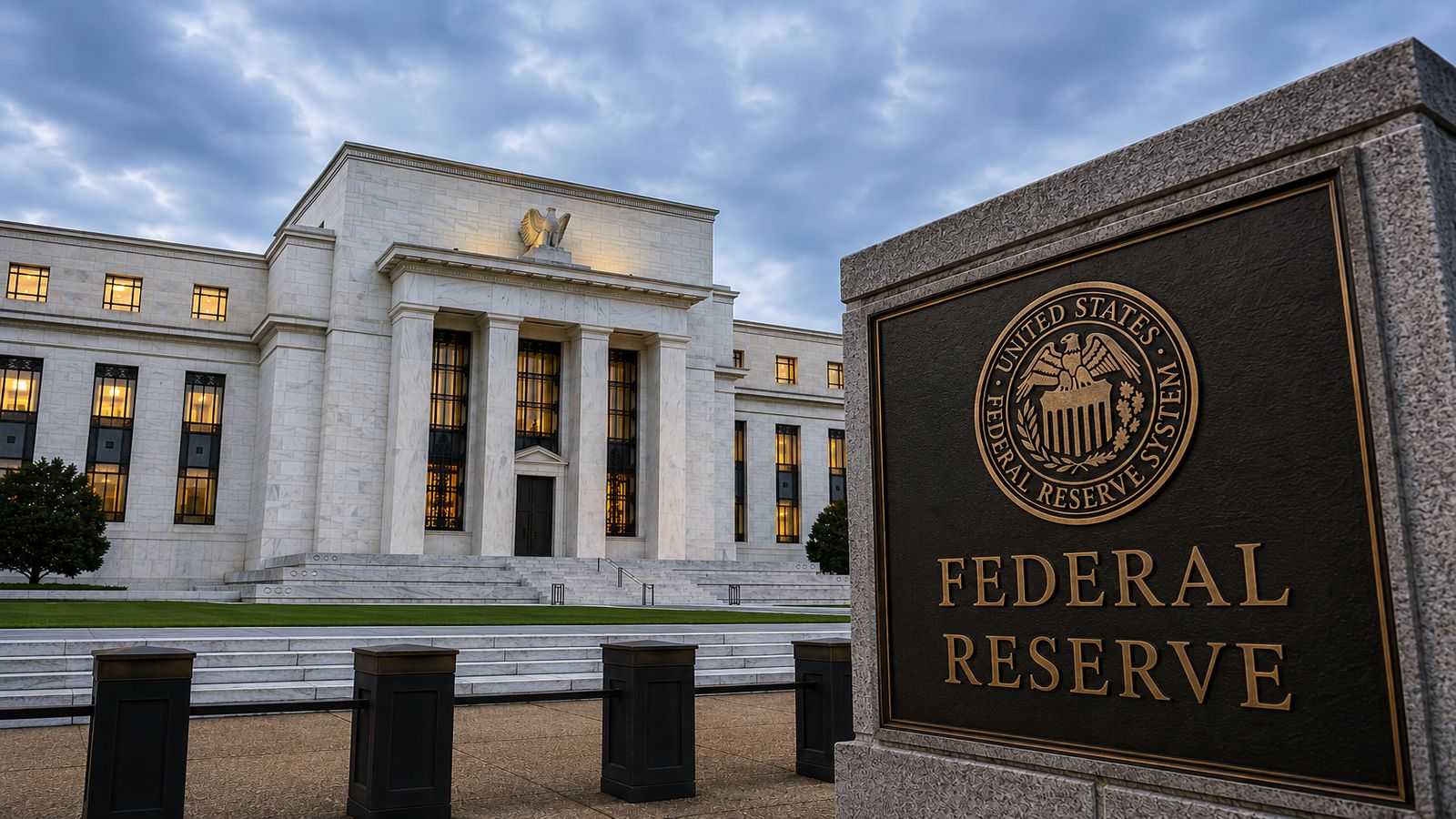
Alan Greenspan is gone at 100. His wife, NBC News correspondent Andrea Mitchell, confirmed he died on June 22, 2026, due to complications from Parkinson's disease. For nearly two decades, this man didn't just run the Federal Reserve. He ran the American economy.
Wall Street treated him like an oracle. If he cleared his throat, the markets shifted. If he carried a thick briefcase, traders assumed interest rates were going up. He presided over the "Great Moderation," an era of low inflation and explosive growth that made him look like a absolute genius.
Then the world broke in 2008.
You can't understand modern American capitalism without looking at how Greenspan built it, and how his ideas ultimately cracked. He was the architect of cheap money and loose regulation. We still live in the house he built, flaws and all. If you want to know why your mortgage rate behaves the way it does or why central banks act the way they do right now, you have to look at what Greenspan did.
From Jazz Clarinet to Ayn Rand
Greenspan wasn't a typical spreadsheet bureaucrat. He started out playing jazz clarinet, even touring with a big band in the 1940s. He went to Juilliard before realizing he was better at math than music.
The real shift happened when he met Ayn Rand, the high priestess of radical self-interest and unfettered capitalism. Greenspan became part of her inner circle. He absorbed her absolute faith in free markets. He believed that businesses would naturally regulate themselves because cheating was bad for long-term profits. It was a philosophy he carried straight into government.
He advised Nixon, Ford, and Reagan before taking the wheel at the Federal Reserve in 1987. Days after he started, the stock market crashed on Black Monday. Greenspan didn't blink. He flooded the banking system with liquidity, cutting interest rates to save the day. It worked. Wall Street learned a lesson that day: if things get ugly, the Fed will bail you out. Traders called it the "Greenspan put."
The Maestro of Easy Money
During the 1990s, Greenspan could do no wrong. He correctly saw that rising productivity from computers meant the economy could grow faster without triggering inflation. He left interest rates low, fueling an epic economic expansion.
But he also ignored the warning signs. In 1996, he used a phrase that defined an era: "irrational exuberance." He saw that tech stocks were getting wildly overvalued. Yet, he didn't raise rates to cool things down. He believed the Fed shouldn't pop bubbles. He thought the central bank should just clean up the mess after they burst.
When the dot-com bubble did burst in 2000, he slashed rates again. He pushed the benchmark interest rate down to a historic low of 1 percent. That cheap money didn't just revive the economy. It migrated into real estate.
The Blind Spot That Broke the Market
This is where the legacy gets messy. Greenspan didn't just keep money cheap. He fought against regulating the exotic financial instruments, like credit default swaps and subprime mortgage derivatives, that were quietly turning the housing market into a casino.
He honestly believed that Wall Street giants would look out for their own safety. He thought self-preservation would beat greed.
He was wrong.
When the subprime mortgage market collapsed in 2007 and 2008, it triggered the worst financial crisis since the Great Depression. The Financial Crisis Inquiry Commission later blamed his decades of deregulation directly for stripping away key safeguards.
To his credit, Greenspan didn't hide. In a famous 2008 congressional hearing, he admitted he was in a state of "shocked disbelief." He acknowledged that his worldview had a massive flaw. The model he trusted to run the world for 40 years simply didn't work the way he thought it would.
How to Protect Your Wealth From the Next Bubble
Central banks don't operate the way Greenspan did anymore. The hands-off, self-regulating ideology is dead. Today's central bankers are much quicker to intervene, but the massive bubbles he allowed to grow have become a permanent fixture of modern financial life.
If you want to survive the kind of market shifts Greenspan used to trigger, you need a playbook that accounts for central bank behavior.
- Watch the credit spread, not just the headlines. Greenspan taught us that when credit gets too easy, risk gets ignored. Look at the spread between safe corporate bonds and high-yield "junk" bonds. When that gap gets incredibly narrow, it means investors are getting reckless. That is your cue to reduce leverage.
- Don't rely on the Fed put. Current central bankers do not have the luxury of slashing rates to zero at the first sign of a stock market dip because inflation risks are much higher today than they were in the 1990s. Build cash reserves so you aren't forced to sell assets during a downturn.
- Audit your real estate exposure. The subprime crisis proved that real estate isn't an isolated asset class. It runs on global credit liquidity. If interest rates stay higher for longer, property valuations face a structural drag. Keep your real estate investments diversified across different geographic regions to buffer against localized collapses.
Greenspan spent his later years writing books, studying economic data into his 90s, and trying to explain why traditional economic forecasting models miss human irrationality. He was a giant who shaped our world, but his career stands as a warning. Markets are only as stable as the human beings operating within them.