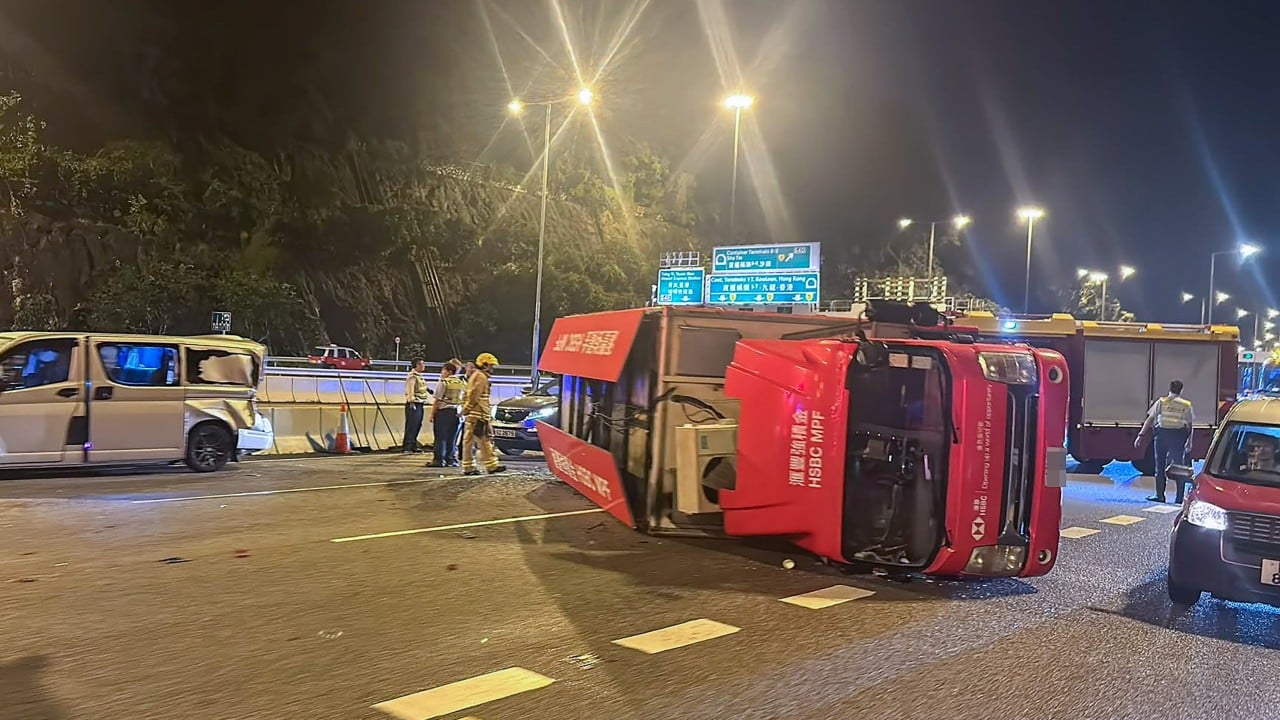
Transport authorities have officially launched a high-level inquiry after a major vehicle collision brought traffic on the primary airport link corridor to a complete standstill, stranding thousands of travelers and exposing deep-seated vulnerabilities in urban transit planning.
When a critical arterial route shuts down for hours because of a single incident, the problem is rarely just the accident itself. The real failure lies in a transit network built on razor-thin margins of error, lacking operational redundancy, and entirely unprepared for unexpected shocks. Commuters missed flights, supply chains stuttered, and emergency response vehicles crawled through gridlocked side streets. This was not an act of God. It was a predictable consequence of managed neglect.
Anatomy of a Failure
To understand why a single crash can paralyze an entire regional economy, we must examine the physical and logistical architecture of modern airport corridors. These links are engineered for maximum throughput during optimal conditions, not for resilience during crises.
Most major metropolitan airports rely on a singular high-capacity arterial road or rail connection to move the vast majority of passengers and cargo between the urban core and the terminals. When that single artery experiences a blockage, alternative paths are practically nonexistent or structurally incapable of absorbing the displaced volume.
During the recent incident, local surface streets quickly became parking lots as navigation applications frantically rerouted tens of thousands of drivers onto residential side streets. Those roads were never designed to handle heavy commercial vehicles, buses, and airport-bound traffic. Traffic signal timings remained fixed, pedestrian crossings became overwhelmed, and the local grid collapsed within forty-five minutes.
Municipal planners often assume that accidents are statistical anomalies that can be managed through standard emergency removal protocols. That assumption is mathematically flawed. In a system operating near maximum capacity, a minor fender-bender during peak hours acts as a primary catalyst for systemic failure.
The Response Delay Crisis
Minutes matter when an airport link goes down. Yet, clearing the recent crash took an inordinate amount of time, raising serious questions about the coordination between municipal police, highway patrol, and private towing contractors.
Heavy recovery vehicles faced the same gridlock as ordinary motorists. Without dedicated, clear emergency lanes or pre-staged heavy wreckers stationed at strategic bottlenecks, first responders were forced to fight their way through miles of stationary traffic just to reach the scene.
Why Traditional Towing Protocols Fail
- Standard dispatch loops require insurance verification and police reports before heavy equipment rolls.
- Private towing monopolies often negotiate slow response windows that do not prioritize public mobility.
- Lack of elevated access or reversible lanes prevents bypass operations around wreckage zones.
When authorities rely on commercial market forces to clear public infrastructure emergencies, the results are predictably sluggish. Efficiency takes a back seat to liability concerns and fee negotiations, while thousands of travelers watch their flight departure windows slam shut from the back of a taxi.
The Economic Toll of Inaction
The cost of a paralyzed airport link extends far beyond missed flights and frustrated passengers. Airlines face cascading scheduling delays as flight crews and aircraft remain trapped on the tarmac or stuck on the highway. Cargo operations ground to a halt, disrupting just-in-time supply chains for perishable goods and high-value manufacturing components.
Economic analysts often quantify these events in millions of dollars of lost productivity per hour. But the hidden cost is reputational. A city that cannot guarantee reliable, resilient access to its primary international gateway signals to global investors and tourists that its foundational infrastructure is brittle.
Regional tourism boards spend tens of millions of dollars marketing a destination as a world-class travel hub, yet a single afternoon traffic stoppage can permanently sour a visitor's impression of the city's operational competence.
Engineering Resilience Instead of Optimizing for Speed
Transport agencies love metrics like average speed and vehicle throughput because they look good in annual reports. They prove that under ideal conditions, the asphalt is moving metal efficiently.
This narrow focus on optimization creates brittle networks. Efficiency maximizes output when everything goes right, but resilience ensures survival when everything goes wrong. Building a resilient airport link requires a fundamental shift in philosophy.
Redundancy as a Requirement
True resilience demands physical and digital redundancy. If a primary highway link fails, secondary and tertiary corridors must be instantly activatable through dynamic tolling, automated signal re-sequencing, and strict commercial vehicle restrictions.
Furthermore, rail integration remains the single most glaring omission in many regional transit portfolios. Cities that rely exclusively on rubber-wheel transport for airport access are inviting disaster. A robust, grade-separated rail connection operating independently of street traffic provides an essential escape valve when road networks seize up.
Yet, rail links are frequently underfunded, poorly integrated with airline check-in systems, or treated as luxury additions rather than mandatory civil defense infrastructure.
The Institutional Blind Spot
The investigation ordered by transport authorities will likely produce a hundred-page report filled with bureaucratic recommendations, inter-agency communication protocols, and calls for better public awareness campaigns.
It will probably miss the point entirely.
Reports rarely hold elected officials accountable for decades of underinvestment in maintenance and structural redundancy. They rarely question the wisdom of funneling endless volumes of private vehicular traffic onto aging highways without expanding multi-modal capacity.
Fixing this problem requires political courage. It means reclaiming road space for dedicated high-occupancy vehicle lanes, investing heavily in automated incident management systems, and prioritizing structural reliability over raw vehicle counts.
Until transport authorities stop treating catastrophic traffic gridlock as an unavoidable act of nature and start recognizing it as a direct indictment of poor planning, the next airport link collapse is merely a matter of time.