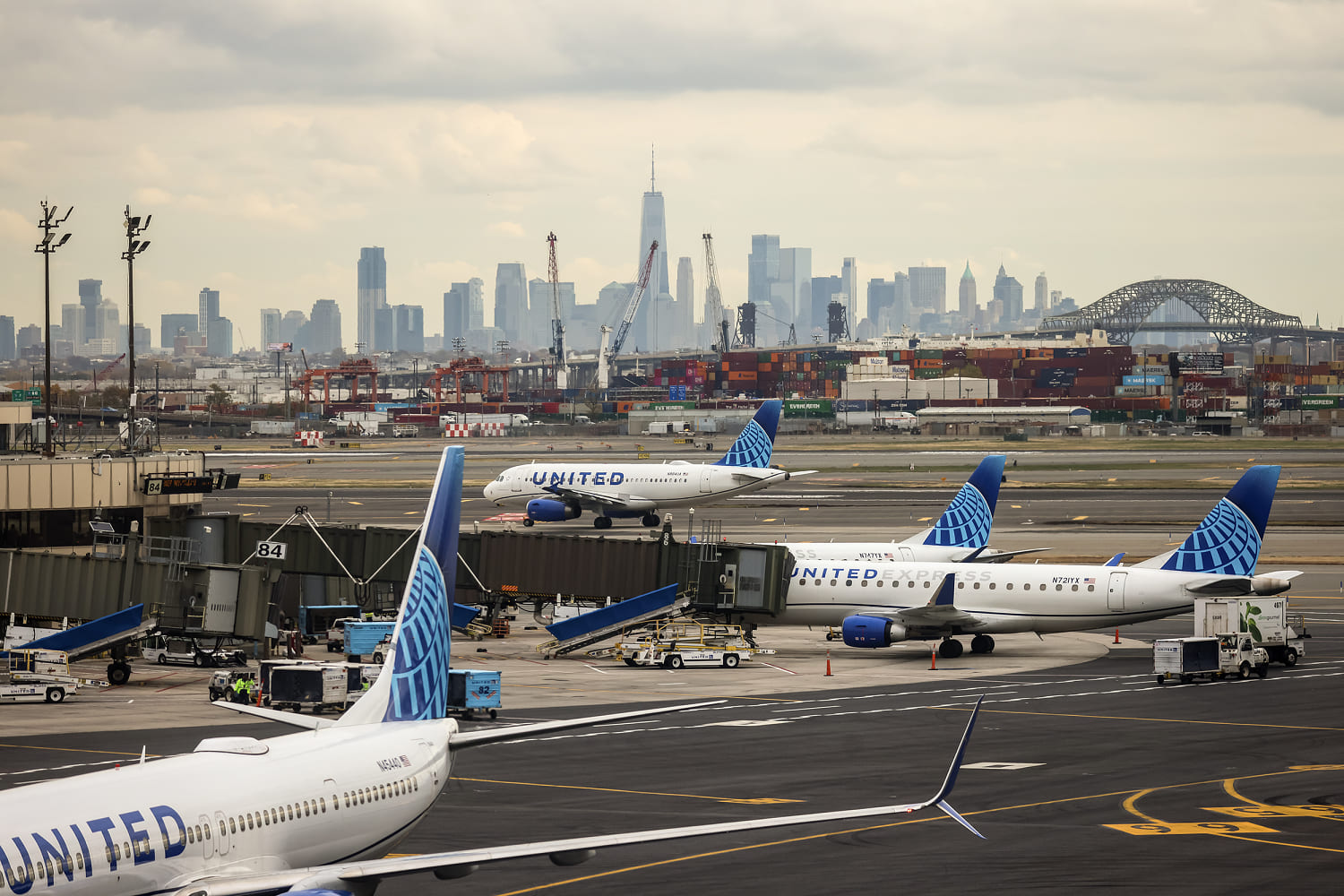
Every time a radar screen blips red or a regional control center drops offline, the narrative writes itself within minutes. Pompous pundits scream about crumbling infrastructure, passengers post tearful selfies from tarmac prisons, and airline executives posture about multi-million-pound losses while quietly pocketing record profit margins. The lazy consensus is uniform: air traffic management is broken, underfunded, and uniquely vulnerable to government incompetence.
It is a comfortable narrative. It is also entirely backwards.
When flights are grounded, delayed, or throttled by system faults, the aviation machine is not failing. It is succeeding. Those agonizing hours spent staring at a departure board in Heathrow or Gatwick are the system acting as a circuit breaker, absorbing shocks so you do not have to absorb a mid-air collision.
I have spent years auditing aviation logistics chains and watching corporations scramble to patch archaic software stacks with digital band-aids. I have watched operations managers sweat through shift handovers where a single software glitch threatens to cascade across thousands of flight paths. The reality is far uglier than the media lets on, but the solution they demand—endless pouring of capital into bigger, faster central computers—will only accelerate catastrophe.
The Myth of the Infinite Capacity Grid
Let us address the foundational lie of modern travel: that airspace can be optimized like a fiber-optic network.
When a sector goes down or an automation tool freezes, the outcry centers on lost efficiency. Commentators treat airspace like highway traffic, assuming that a software patch or a hardware upgrade can seamlessly double throughput. This mechanical view of the skies ignores the brutal physics of kinetic energy.
Air traffic control is not a scheduling algorithm. It is a human-monitored safety buffer designed to manage margins of error that shrink every time a commercial jet climbs past Mach 0.8. When an IT system hiccups, the automated spacing tools fail. In response, controllers revert to procedural control, increasing lateral and vertical separation standards manually.
This means flow rates drop by fifty percent or more. To the passenger, this looks like an unmitigated disaster. Planes sit idle. Schedules shatter. But look at what did not happen: two heavy metal tubes did not occupy the same patch of sky at thirty-six thousand feet.
The delays are the safety valve doing its job. When the system slows down because a screen flickers or a data feed stutters, it is because human beings are refusing to gamble with your life using degraded data. If you want zero delays, you are asking for zero safety margins.
The Software Dependency Trap
The real crisis in aviation management is not a lack of funding or ancient vacuum tubes in control towers. It is our pathological addiction to brittle software consolidation.
For decades, national air navigation service providers have tried to streamline operations by replacing localized, resilient systems with massive, centralized digital architectures. They wanted single panes of glass. They wanted unified platforms. They wanted efficiency metrics that looked good in quarterly board reports.
What they built were magnificent, fragile monoliths.
Imagine a scenario where a single cloud-based flight data processor handles the clearance profiles for an entire continent. When that central nervous system hiccups due to a minor patch deployment or a localized network drop, the shockwave ripples instantly across every controlled sector.
Older, modular systems were clunky. They required manual coordination, paper flight strips, and shouted conversations across control floors. They were inefficient, slow, and labor-intensive. They were also remarkably resilient. You could knock out power to a sector, and local controllers could transition to backup generators and manual track-plotting without dropping a single plane out of the safety envelope.
Today, we have traded resilience for speed. We have engineered out the human slack that used to absorb technical failures. When the digital brain stumbles, the entire body freezes because nobody knows how to navigate the skies without the green lines on the monitor telling them where to point their finger.
Dismantling the People Also Paws: The Real Cost of Fixing the Skies
Let us tackle the recurring public inquiries that flood search engines every time a major grounding event hits the news cycle.
Why can't they just upgrade the computers over a weekend? Because you cannot hot-swap the nervous system of an active global transport network while millions of people are airborne. Every software update requires exhaustive validation cycles, redundant failover testing, and regulatory sign-offs that take years. Rushing code into a live air traffic environment is how you trade a two-hour ground stop for a catastrophic hull loss.
Are private management firms the answer? Absolutely not. Handing critical safety infrastructure to profit-driven entities introduces a perverse incentive structure. When quarterly dividends depend on minimizing overhead, maintenance budgets for redundant hardware are the first things on the chopping block. We do not need more market competition in airspace management; we need brutal, unyielding engineering rigor that prioritizes fault tolerance over throughput optimization.
Why don't pilots just fly visually when radar goes down? Because modern high-density corridors operate at speeds and altitudes where visual flight rules are a suicide pact. At cruise velocity, closure rates leave zero time for eye-to-eye spotting. Radar and automated transponders are not conveniences; they are mandatory physics-defying requirements for moving hundreds of thousands of people through narrow atmospheric slots simultaneously.
The Uncomfortable Downside of Decentralized Resilience
My contrarian prescription is not painless. If we are serious about building a robust aviation network, we have to accept a radical trade-off: intentional, engineered inefficiency.
If we want to eliminate catastrophic system-wide failures, we must break apart centralized digital monopolies. We need to fund redundant, analog-capable fallback systems that cost billions to maintain and sit idle ninety-nine percent of the time. We must accept that flight cancellations will become more frequent, not less.
Airlines and airports will hate this. Passengers will scream bloody murder when their weekend getaways are scrubbed because a regional control center dropped back to manual verification protocols.
The hard truth is that modern society has traded risk for convenience, and now we throw tantrums whenever the bill comes due. We demand 99.999 percent uptime while refusing to fund the triple-redundant infrastructure required to sustain it without single points of failure.
Stop demanding faster processing. Stop whining about delays that keep you alive. Start asking why we built a system so brittle that a single server glitch can bring a continent to a halt, and demand the expensive, redundant, decentralized architecture required to fix it permanently.
Until then, grab a book, take a breath, and be grateful for every minute your plane stays parked on the tarmac instead of colliding with another one over the channel.