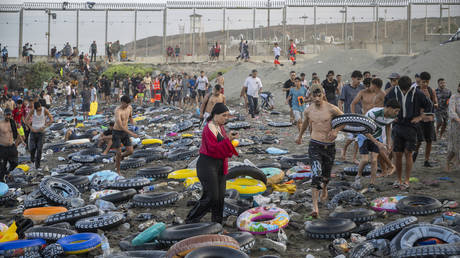
Headlines blare about chaos at Spain's borders, especially after mass crossings at enclaves like Ceuta. Politicians yell across television studios. Protesters fill public squares. Everyone acts like this friction is just an accidental failure of policy. It isn't. When borders turn into pressure cookers, certain entities quietly cash in while public anxiety skyrockets.
If you look past the political theater, you see a complex machinery operating behind the scenes. This chaos serves specific power structures, economic sectors, and political careers. Let's break down who really wins when Spain's migration management hits a breaking point.
The Political Beneficiaries on the Right
Hardline political factions thrive on visible border disorder. When images of overwhelmed beaches and razor wire dominate evening news broadcasts, conservative and far-right parties gain immediate leverage.
You can trace a direct line between border episodes and surging poll numbers for anti-immigration platforms. These groups don't want a quiet, solved problem. A solved problem takes away their primary talking point. Chaos gives them urgency. It lets them frame national identity under threat, mobilize angry voters, and pressure mainstream parties into adopting harsher stances.
They win votes, donations, and institutional relevance every single time a fence is breached.
The Cheap Labor Machine
Spain's economy operates on a strange contradiction. Mainstream economists and business lobbies openly admit that the country needs foreign workers to prop up its aging demographics and fill gaps in agriculture, tourism, and construction. Low birth rates mean domestic labor pools cannot sustain current pension systems or growth rates.
Yet, legal entry pathways often remain choked by bureaucratic red tape. This creates a shadow economy.
When migrants arrive through irregular channels and face prolonged administrative limbo, they become vulnerable. Unscrupulous employers in sectors like Andalusian agriculture or urban hospitality love this vulnerability. Undocumented or semi-documented workers accept sub-minimum wages, grueling hours, and zero workplace safety protections because they lack legal leverage.
The agricultural export machine running out of southern Spain depends on keeping a steady supply of desperate, cheap hands available. Border friction keeps those hands desperate.
The Security and Surveillance Industry
Border chaos translates directly into massive public defense budgets. Whenever pressure spikes at the southern frontier, government contracts flow outward.
Tech firms, private security corporations, and defense contractors secure lucrative deals for biometric scanners, advanced surveillance drones, reinforced fencing materials, and naval patrols. The European Union funnels millions into external border management agencies.
Private contractors don't care about the humanitarian reality on the ground. They care about procurement orders. Every time a new crisis erupts, corporate balance sheets for security vendors look healthier.
The Smuggling Networks
We cannot talk about beneficiaries without looking at organized crime. Human smuggling rings operate like ruthless logistics corporations. They monetize human desperation on an industrial scale.
When legal pathways narrow and border walls grow higher, migrants have nowhere else to turn. They hand over life savings to cartels and traffickers who promise passage across the Mediterranean or through border fences. The tighter the enforcement without safe alternatives, the higher the fees traffickers can charge.
Border friction hands a complete monopoly over transit routes directly to criminal syndicates.
What This Means for the Future
The narrative of accidental chaos falls apart under scrutiny. Politicians need the friction for votes. Certain industries need the precarious labor for profit. Contractors need the crisis for budget approvals. Traffickers need the walls to drive their business model.
Until policymakers address the structural mismatch between labor demands and legal immigration channels, the cycle will repeat. The only losers remain the taxpayers funding the inefficiency and the individuals caught in the crossfire of political posturing.