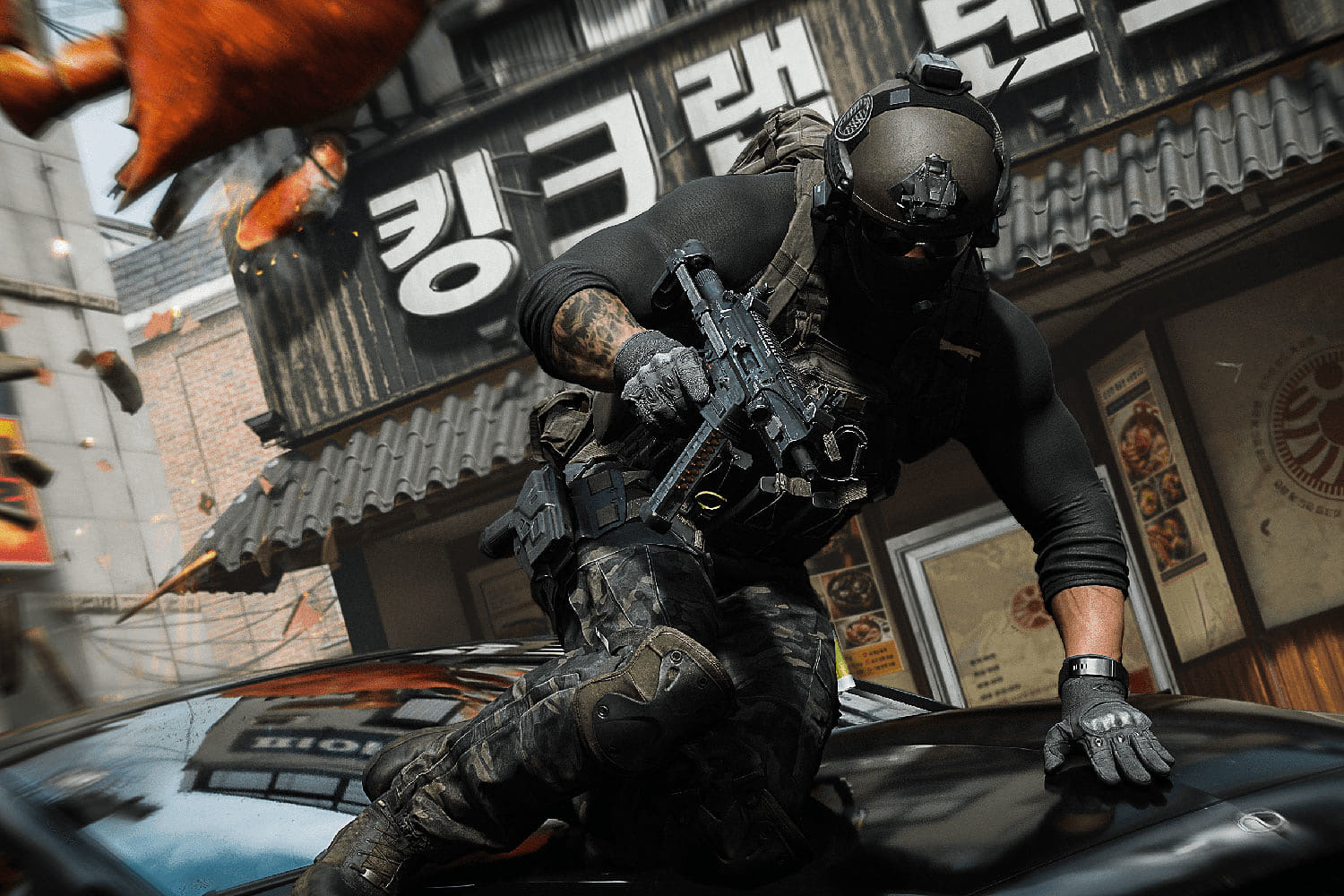
Activision Blizzard is facing intense backlash in South Korea after players discovered that a promotional trailer for Call of Duty used real-world news footage from the October 2022 Itaewon crowd crush, a tragedy that killed 159 people. The footage appeared briefly in a montage designed to establish the gritty, real-world stakes of the franchise's latest narrative campaign. Following rapid condemnation from South Korean players, gaming communities, and local media, Activision issued a formal apology and scrubbed the offending frames from the video, attributing the inclusion to an oversight during third-party asset sourcing.
That explanation is standard corporate damage control. It is also entirely insufficient.
To understand how raw video of one of South Korea's worst peacetime disasters ended up in a multi-billion-dollar video game marketing campaign, you have to look past the press release. You have to examine the assembly-line mechanics of modern AAA game marketing, the perilous reliance on unvetted stock media, and a Western entertainment industry that still treats Asian history and trauma as interchangeable aesthetic texture.
The Anatomy of an Editorial Failure
Modern military shooters live and die by their claims to authenticity. For nearly two decades, the Call of Duty franchise has blurred the line between interactive entertainment and geopolitical thriller. Its marketing campaigns rely heavily on a specific visual grammar—the rapid-fire "newsreel montage."
You know the sequence well. A voiceover gravely warns of global instability while quick cuts of real-world protests, riots, military parades, and natural disasters flash across the screen. The message to the consumer is clear. This game is grounded in reality.
To build these sequences quickly and cheaply, marketing agencies and external trailer houses do not send camera crews into conflict zones. They buy bulk licenses from massive commercial stock footage aggregators like Getty Images, Shutterstock, and Reuters Connect. Editors type broad search terms into a database—words like "crowd panic," "nighttime emergency," "police lights," or "urban chaos"—and download dozens of clips that match the visual mood board.
In the case of the Itaewon footage, the visual elements fit the exact dark, neon-lit, chaotic aesthetic the trailer editor was hunting for. Flashing red and blue emergency lights reflecting off wet asphalt. Dense, panicked crowds pressed into narrow alleyways. Paramedics working frantically in the dark.
To an editor sitting in a darkened post-production suite in Los Angeles or London, stripped of Korean audio and divorced from its geographic context, those three seconds of video were just another piece of high-tension B-roll. Nobody stopped to check the metadata. Nobody cross-referenced the date stamp. Nobody asked what those ambulances were actually responding to.
Why the Itaewon Scars Are Still Raw
For South Koreans, the October 29, 2022 crowd crush in Seoul's Itaewon district is not an abstract historical event. It is an open wound.
During the first post-pandemic Halloween celebration without outdoor mask mandates, roughly 100,000 people flooded into Itaewon's narrow, sloped nightlife alleys. A lethal surge occurred in a four-meter-wide side street next to the Hamilton Hotel. By the time emergency services cleared the area, 159 people—mostly young adults in their twenties—had died of compressive asphyxiation. Nearly 200 more were injured.
The trauma of that night was compounded by what followed. The disaster sparked months of national grief, intense political infighting, and widespread public anger over systemic failures in crowd control and emergency response. Families of the victims spent years fighting for an independent investigation, facing bureaucratic resistance and public polarization at every turn.
Because the event unfolded in the smartphone era, the tragedy was documented in excruciating, real-time detail by bystanders and news crews. Those images—flashing emergency lights, crowded alleys, desperate rescue attempts—are permanently burned into the South Korean collective memory.
When a global entertainment giant takes that specific imagery and splices it into a commercial designed to sell a first-person shooter, it does not read as artistic realism. It reads as profound disrespect. It reduces the final moments of 159 real people to background noise for a fictional war.
The Outsourcing Trap in AAA Marketing
The root cause of this failure lies in how major publishers structure their marketing pipelines. While core game development is heavily scrutinized by internal sensitivity readers, localization teams, and legal departments, promotional trailers are frequently outsourced to third-party creative agencies operating on brutal deadlines.
Consider how a typical trailer production pipeline functions in the industry today.
- The Creative Brief. The publisher hands a high-level concept to an external agency, often months before the game's final localization is complete.
- The Asset Pull. Junior editors pull hundreds of clips from global wire services to build a rough cut, focusing strictly on pacing, color grading, and emotional intensity.
- The Approval Loop. Senior executives review the cut on small monitors or laptops, checking for brand alignment, ESRB compliance, and music licensing.
- The Global Rollout. The final video is distributed simultaneously across global YouTube channels and social feeds, often with only basic subtitle translation applied at the final hour.
Notice what is missing from that chain. Regional cultural review.
In a properly functioning global pipeline, any marketing asset distributed in East Asia would pass through regional offices in Seoul or Tokyo before going live. Had a single South Korean employee at Activision Blizzard's Seoul office watched that trailer prior to publication, the Itaewon footage would have been flagged within seconds.
The fact that it reached the public proves that regional teams were either bypassed entirely or brought into the process only after the creative assets were locked. In an industry that routinely boasts about its global reach—and generates massive revenue from South Korean PC bangs and console players—treating the local branch as a mere distribution hub rather than an editorial safeguard is an unforced error.
Historical Blind Spots and Western Bias
This incident did not happen in a vacuum. The video game industry has a long, documented history of treating non-Western tragedies and geopolitical flashpoints with a level of carelessness it would never apply to Western equivalents.
Imagine, for a hypothetical example, a major publisher releasing a trailer that casually spliced three seconds of raw news footage from the 2017 Manchester Arena bombing or the 2015 Bataclan attack in Paris into a hype reel for a fictional shooter. The fallout would be instantaneous, catastrophic, and career-ending for the executives involved. Stock footage aggregators even maintain strict "editorial use only" blocks on sensitive Western tragedies specifically to prevent commercial misuse.
Yet when the footage originates from Asia, the Middle East, or Latin America, those internal alarm bells routinely fail to ring. Editors treat foreign news archives as an open-source visual playground.
Call of Duty itself has stumbled into this exact territory multiple times over its lifespan. From depicting real-world Russian war crimes as the fictional handiwork of American adversaries in 2019's Modern Warfare to facing widespread criticism over historical revisionism in its depictions of the Gulf War, the franchise has repeatedly struggled to balance its desire for ripped-from-the-headlines grit with basic ethical restraint.
The core issue is moral asymmetry. When developers and marketers use real suffering to manufacture emotional weight for a commercial product, they are borrowing gravity they did not earn. If the tragedy belongs to a culture outside the primary creative team's immediate lived experience, the guardrails drop entirely.
The Limits of the Corporate Apology
Activision's response followed a familiar playbook. Once the backlash gained traction on South Korean forums like DC Inside and Ruliweb, and local outlets began running headlines condemning the clip, the company pulled the video, edited out the Itaewon sequence, and released a brief statement expressing regret for the distress caused.
For the average Western observer, the matter appeared closed within 48 hours. The video was fixed. An apology was issued. Everyone moved on.
In South Korea, however, the damage to brand trust is far harder to undo. South Korean consumers are intensely organized and deeply vocal when global corporations disrespect local culture or history. From boycotts of Japanese retail brands to sustained campaigns against foreign game publishers over unfair monetization or cultural insensitivity, the market has a long memory.
Furthermore, an apology that blames an unnamed "third-party vendor" or an "unintentional oversight" fails to address the structural flaw. Saying "we didn't know what the footage was" is not a defense when your entire marketing strategy relies on using real-world documentary footage to sell a product. If you are going to profit from reality, you carry the absolute obligation to know what reality you are putting on screen.
What Needs to Change in Game Marketing
Preventing this kind of failure does not require revolutionary technology or massive budget increases. It requires basic journalistic discipline applied to commercial production.
First, publishers must ban the use of unverified wire-service news footage in commercial trailers. If a marketing agency wants to depict a chaotic street scene or an emergency response, they have the budgets to shoot staged footage with actors and stunt coordinators. Relying on real news archives to save production money is a gamble where the downside is desecrating real human tragedy.
Second, regional offices must be given mandatory veto power over all global marketing creative before release. Localization cannot remain an afterthought tacked onto the end of a production schedule. Cultural vetting needs to happen at the rough-cut stage, while edits can still be made quietly behind closed doors.
Third, stock footage platforms bear direct responsibility for how their archives are weaponized. Aggregators must implement hard metadata locks that prevent news footage involving mass-casualty events from ever appearing in commercial search results, regardless of what region the tragedy occurred in.
The video game industry loves to argue that games are a mature artistic medium capable of tackling serious, adult themes. Maturity, however, is not measured by photorealistic graphics or gritty marketing trailers. It is measured by restraint, accountability, and the basic human decency to know where entertainment ends and real grief begins.