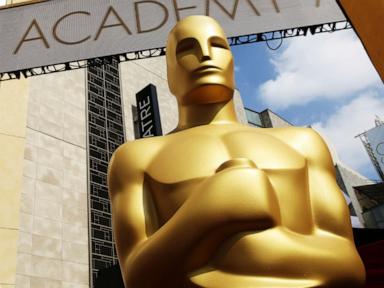
The Academy of Motion Picture Arts and Sciences just dropped its latest rule updates, and the industry is reacting with the usual mix of polite applause and "historic" headlines. They expanded international eligibility. They "addressed" generative AI. They think they saved cinema.
They didn't.
What we are witnessing isn't progress; it’s a desperate attempt to maintain a monopoly on prestige by a guild that still thinks "international" is a charity category and AI is a monster under the bed. The new rules regarding international feature eligibility and AI usage aren't forward-thinking. They are the panicked scribblings of a legacy institution trying to build a moat around a burning castle.
The International Illusion
The big headline this cycle is the expansion of the International Feature Film category. The Academy is patting itself on the back for allowing films to qualify through non-theatrical means or expanded festival runs in specific circumstances.
Here is the truth: The International Feature Film category shouldn't exist.
By keeping a separate box for "International" films, the Academy is institutionalizing a "separate but equal" doctrine that keeps global cinema in the basement. If Parasite proved anything, it’s that the best film is the best film, regardless of the language spoken. Yet, the Academy continues to force countries to "submit" one official film, a process steeped in backroom politics and government censorship.
I have spent two decades watching brilliant, subversive films from the Middle East and Southeast Asia get buried because a local government board didn’t find them "representative" enough for an Oscar bid. By "expanding eligibility" within this flawed framework, the Academy isn't helping global filmmakers; they are reinforcing a bottleneck.
The real disruption would be abolishing the category entirely. Fold it into Best Picture. Force the voters—who now represent a more global demographic—to actually watch movies with subtitles all year round, not just during the frantic weeks of "for your consideration" screenings in January.
The AI Boogeyman and the "Human" Lie
Then we have the AI rules. The Academy’s new stance essentially dictates that "only humans" are eligible for awards. It’s a line in the sand that sounds noble but is functionally illiterate regarding how modern production works.
The Academy wants to pretend there is a clean, binary divide between "human-made" and "AI-generated." There isn't. Every modern color grade, every noise-reduction algorithm, and every complex VFX plate in a Best Picture nominee already uses machine learning.
When a director uses a tool to de-age an actor or stabilize a shot, they are using the precursors to the very tech the Academy is now trying to ban from "creative" credit. By drawing this hard line, they are setting themselves up for a forensic nightmare. Who decides when a generative fill in a background plate crosses the line from "tool" to "creator"?
The fear isn’t that AI will write a better script than a human. The fear is that AI will expose how formulaic and "algorithmic" human-written Oscar bait has become. If a Large Language Model can replicate the beats of a standard biopic, the problem isn’t the software—it’s the lack of human imagination in the writers' room.
The Theatrical Requirement is a Class War
The Academy continues to double down on theatrical requirements. To be eligible for Best Picture, a film must have a qualifying run in specific US markets. They claim this is about "preserving the cinematic experience."
It’s actually about preserving the business model of three specific theater chains and five major studios.
I’ve sat in those boardrooms. I know the math. A theatrical run is a massive tax on independent filmmakers. It costs tens of thousands of dollars to rent those screens, buy the trades, and run the ground game in Los Angeles. For a streaming-first film or a micro-budget indie, the theatrical requirement isn't a "standard of quality"—it's a pay-to-play barrier.
If the Academy cared about the "art of film," they would acknowledge that a kid watching a masterpiece on an OLED iPad in rural India is having a more "cinematic" experience than a distracted tourist watching a mediocre blockbuster in a sticky-floor multiplex. By tethering "quality" to "physical seats in a room," the Oscars are signaling that they are a trade organization for theater owners, not an arts organization for creators.
The Technical Category Erasure
While the world looks at the big categories, the "nuance" the competitor missed is the slow death of the craft awards. The Academy has been consistently trying to shove the technical awards—Editing, Sound, Makeup—into the pre-show or "edited-for-time" segments.
The new rules don't fix the fundamental disrespect shown to the people who actually build the movies. You cannot claim to protect the "human element" of filmmaking from AI while simultaneously treating the humans who do the technical labor as second-class citizens during the broadcast.
The Meritocracy Myth
The most dangerous misconception the competitor article perpetuates is that these rules make the Oscars more "fair."
The Oscars have never been a meritocracy. They are a political campaign.
The "International" expansion just adds more lobbyists to the mix. The "AI" ban just creates more work for lawyers to vet metadata. None of this improves the quality of the films being honored. It just increases the overhead.
If you want to fix the Oscars, you don't tweak the eligibility rules for a category that shouldn't exist. You don't ban technology that is already integrated into the workflow.
You change the voting pool. You remove the lifetime memberships for voters who haven't worked in the industry since the Reagan administration. You make the ballots transparent. You stop the "campaigning" period entirely and let the work stand on its own.
But the Academy won't do that. Because the Oscars aren't about the best movies. They are about the best version of the industry's image. These new rules are just a fresh coat of paint on a crumbling facade.
Stop looking at the rulebook as a guide for progress. It is a document of preservation. It is designed to keep the outsiders out and the incumbents in. The more they "expand" the rules, the more they narrow the definition of what they are willing to accept.
The industry is changing. The medium is evolving. The Academy is just trying to make sure the door stays locked from the inside.
Burn the rulebook. Watch the movies. Ignore the statues.