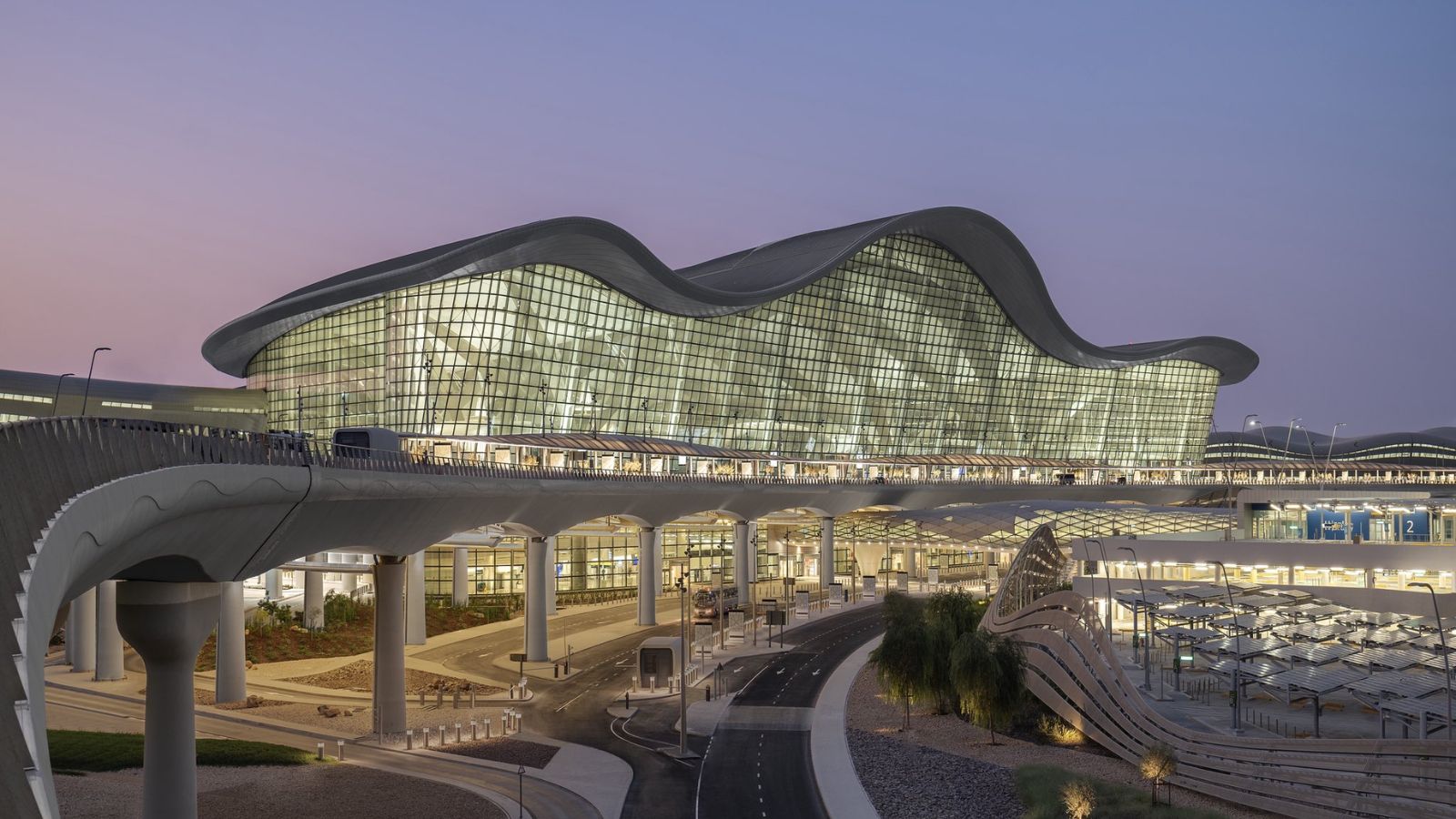
The headlines are screaming again. Social media is a dumpster fire of "breaking news" alerts claiming that Zayed International Airport has shuttered its doors because of regional escalations. It is the same tired script every time a missile crosses a border in the Middle East. Panicked travelers refresh their apps, airlines scramble their schedules, and the clickbait machine churns out low-effort "status updates" that do nothing but feed a frenzy.
Here is the reality: Abu Dhabi isn't closing. It won't close. To suggest otherwise betrays a fundamental misunderstanding of how the United Arab Emirates operates as a global logistics hub and how modern airspace actually functions during a conflict.
The Mirage of Total Shutdown
The "lazy consensus" among travel bloggers and secondary news outlets is that a regional war equals a total aviation blackout. They see a single rerouted flight and report a systemic collapse. I have spent a decade analyzing aviation corridors in high-tension zones, and I can tell you that "closed" is a word used far too loosely by people who have never looked at a NOTAM (Notice to Air Missions) in their life.
When regional tensions spike between major powers like Israel and Iran, the UAE does not simply turn off the lights. It pivots. It reroutes. It optimizes.
The UAE’s aviation strategy is built on Redundant Connectivity. If Corridor A is risky, they shift to Corridor B within minutes. The idea that a sovereign, global-tier airport like AUH (Zayed International) would just "close" is a fantasy designed to generate clicks. It ignores the billions of dollars in transit revenue and the diplomatic weight the UAE carries to keep its skies neutral.
Why Your Flight App Is Lying to You
You see a "Delayed" or "Cancelled" status and assume the airport is under siege. You are wrong.
Flight cancellations during regional instability are rarely about the airport being "closed." They are almost always about Risk Assessment Matrices used by individual airlines.
- Lufthansa might pull out because their internal insurance premiums spiked.
- Etihad will keep flying because they have local intelligence that Western carriers lack.
- Wizz Air might cancel because their crew duty cycles can’t handle a 40-minute reroute.
The airport remains a functioning entity. It is the users of the airport who blink. If you want to know what is actually happening, stop looking at the departure board and start looking at the fuel burn stats. Flights are taking longer paths to avoid specific FIRs (Flight Information Regions), but they are still landing.
The Sovereignty Shield
Let’s talk about the logic the "industry experts" miss. Abu Dhabi is not a passive observer in regional conflict; it is an essential pressure valve. During every major flare-up in the last twenty years, the UAE has maintained its status as a "Safe Harbor."
Closing the airport would be an admission of vulnerability that the UAE leadership is not prepared to make. More importantly, the global community cannot afford it. If you shut down Abu Dhabi and Dubai, you effectively sever the primary artery between Europe and Asia. The economic blowback would be so severe that even the most aggressive regional actors have a vested interest in keeping those corridors open.
Imagine a scenario where the Strait of Hormuz is physically blocked. Air cargo becomes the only way to move high-value goods. In that crisis, the airport doesn't close—it becomes the most valuable piece of real estate on the planet. Its capacity would be pushed to the limit, not reduced to zero.
The Cost of the "Safety First" Fallacy
Western media outlets love the "safety first" narrative because it sounds responsible. It’s not. It’s often a mask for a lack of granular data.
I’ve seen airlines lose millions of dollars by "preemptively" cancelling flights based on Twitter rumors, only to watch their competitors capture 100% of the market share three hours later when the "imminent threat" turned out to be a routine exercise or a misinformed report.
If you are a traveler or a business person, the "Status Update" articles you are reading are worse than useless—they are actively misleading. They treat geopolitical events like weather patterns. They aren't. They are negotiated, signaled, and managed.
The Actual Metrics You Should Watch
Stop looking at "breaking news" banners. If you want to know if Abu Dhabi is actually in trouble, monitor these three things:
- War Risk Insurance Premiums: If Lloyd's of London hasn't officially designated the entire UAE landmass as an excluded zone, the airport is open. Period.
- Diverting to Al Maktoum (DWC): If flights start shifting from Zayed International to the secondary airports in the desert, it means they are clearing the main runways for government or strategic logistics. That is a sign of a shift in priority, not a closure.
- NOTAM Stringency: Look for "Prohibited Areas" being drawn in the flight paths. Unless those circles sit directly over the runway headers, the planes will keep coming.
The Brutal Truth About Travel Advice
The "advice" being handed out—to stay away, to cancel your layover, to wait for an "all clear"—is based on a version of the world that no longer exists. We live in a state of permanent regional friction. If you wait for the Middle East to be "quiet" before you fly through Abu Dhabi, you will never leave your house.
The airport is a fortress of logistics. It is designed to operate in the gray zone. The people telling you it’s closed are usually the ones who are too afraid to check the coordinates themselves.
Stop asking if the airport is closed. Start asking why you’re so easy to scare.
The runways are hot. The lights are on. Get on the plane or get out of the way.