In the glass-walled trading floors of London and Singapore, the sound of a falling market isn't a crash. It is a collective, rhythmic exhale.
For months, the global oil market has been holding its breath, turning blue in the face as it stared at a map of the Middle East. Geopolitical tension is a heavy weight. It sits on the chest of every logistics manager, every gas station owner, and every family trying to budget for a cross-country move. But on a Tuesday that felt like any other, the pressure finally eased. The news didn't come with a fanfare. It came as a signature on a document in Baghdad.
Iraq’s State Oil Marketing Organization, known to the world of high finance simply as SOMO, finally inked the deals. The taps are turning. The oil is flowing again through the long-dormant veins of the Ceyhan pipeline toward Turkey.
To a casual observer, a pipeline is just steel and weld. To the global economy, it is a carotid artery. When it stops, the heart of commerce skips a beat. When it restarts, the world relaxes.
The Ghost in the Pipes
Consider for a moment a technician named Ahmed. He is a hypothetical composite of the thousands of workers who keep the Kirkuk-Ceyhan line operational, but his reality is very much grounded in the grit of the industry. For nearly a year, Ahmed has walked the perimeter of pumping stations that remained eerily quiet. In the oil business, silence is the sound of lost billions.
The dispute between Baghdad and the Kurdistan Regional Government (KRG) over who has the right to sell the black gold beneath the northern sands wasn't just a legal spat. It was a physical blockage. Nearly 450,000 barrels of oil per day—roughly half a percent of the entire world’s supply—had nowhere to go. It sat in the dark, underground, while the world above screamed for price stability.
When those barrels are missing, the ripple effect is tactile. You feel it at the pump in a suburb of Chicago. You feel it in the shipping costs of a freighter crossing the Atlantic.
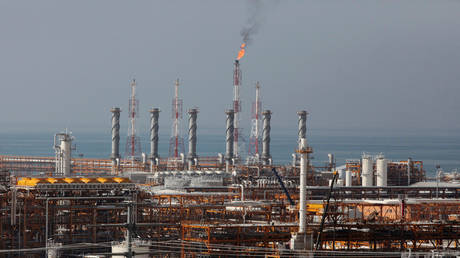
But now, the silence has been broken. The contracts signed by SOMO with international buyers mean that the legal fog has cleared enough for the machines to roar back to life. Crude is moving north again, crossing the border into Turkey and filling the tankers at the Mediterranean port of Ceyhan.
The Gravity of the Barrel
The immediate reaction was swift. Brent crude, the global benchmark, dipped. It wasn't a freefall, but a steady, calculated slide back toward the $70 mark.
Prices don't just drop because there is more oil. They drop because there is less fear.
The market is a psychological beast. It prizes predictability over almost anything else. For months, the "Iraq-Turkey problem" was a variable that could spin out of control at any moment. By resolving the export deals, SOMO didn't just provide more fuel; they provided a ceiling for anxiety.
The mechanics of this shift are fascinatingly simple yet devastatingly impactful. When Iraq resumes these flows, it eases the burden on other OPEC+ members who have been flirting with the idea of further production cuts. It creates a buffer. If a storm hits the Gulf of Mexico or a refinery in Europe goes offline, those 450,000 barrels from Northern Iraq are the safety net that prevents a price spike from turning into a full-blown economic crisis.
The Invisible Stakes of a Signature
We often talk about "oil flows" as if they are rivers of water, but they are more like rivers of gold and blood. The revenue from these deals is the lifeblood of the Iraqi state. It pays the salaries of teachers in Erbil and doctors in Baghdad. It funds the reconstruction of cities that still bear the scars of a decade of conflict.
When the exports stopped, the human cost was immediate. Budget deficits grew. Infrastructure projects stalled. The "cold facts" of a trade dispute mean very little until you realize those facts translate directly into whether a school has heating or a road gets paved.
The resumption of flows via Turkey represents a rare moment of alignment in a region where interests usually collide. It suggests that, for now, the need for economic stability has outweighed the desire for political posturing. Baghdad needs the cash. The KRG needs the survival. Turkey needs the transit fees and the energy security.
It is a fragile peace, written in the ink of an export contract.
The Weight of the Future
But don't be fooled into thinking the story ends with a falling price chart. The oil market is never truly "settled." Even as the Ceyhan tankers fill up, new shadows are lengthening.
Global demand is a fickle thing. While the supply side of the equation is getting a boost from Iraq, the demand side is looking shaky. High interest rates in the West are acting like a brake on the engine of growth. China’s industrial recovery is stuttering, moving in fits and starts rather than the triumphant gallop many predicted.
The "oil slip" we are seeing today is the market's way of finding its level in a world that is trying to decide if it's heading for a recession or a soft landing. The Iraqi oil is a much-needed weight on the scale of supply, helping to counter-balance the inflationary pressures that have haunted us since the turn of the decade.
The real story isn't the price on the screen. It is the shift in the atmosphere.
Imagine a logistics manager in Rotterdam. For months, his spreadsheets have been highlighted in red, reflecting the volatility of his fuel costs. He looks at the ticker today and sees the slip. He doesn't cheer; he just sighs. He can finally plan for next month. He can tell his drivers that the routes are staying the same. He can tell his boss that they might actually hit their margins this quarter.
That is the human element of a SOMO export deal. It is the restoration of the ability to plan, to hope, and to move forward without looking over your shoulder for the next price shock.
The oil is moving. The pressure is dropping. The world, for a brief moment, feels a little more manageable.
Somewhere on the border between Iraq and Turkey, a valve is being turned. It is a heavy, industrial motion, requiring the strength of two men and the precision of an engineer. As the metal groans and the crude begins its long journey to the sea, the vibration travels through the earth, through the pipes, and eventually, into the very fabric of our daily lives.
The silence is over.