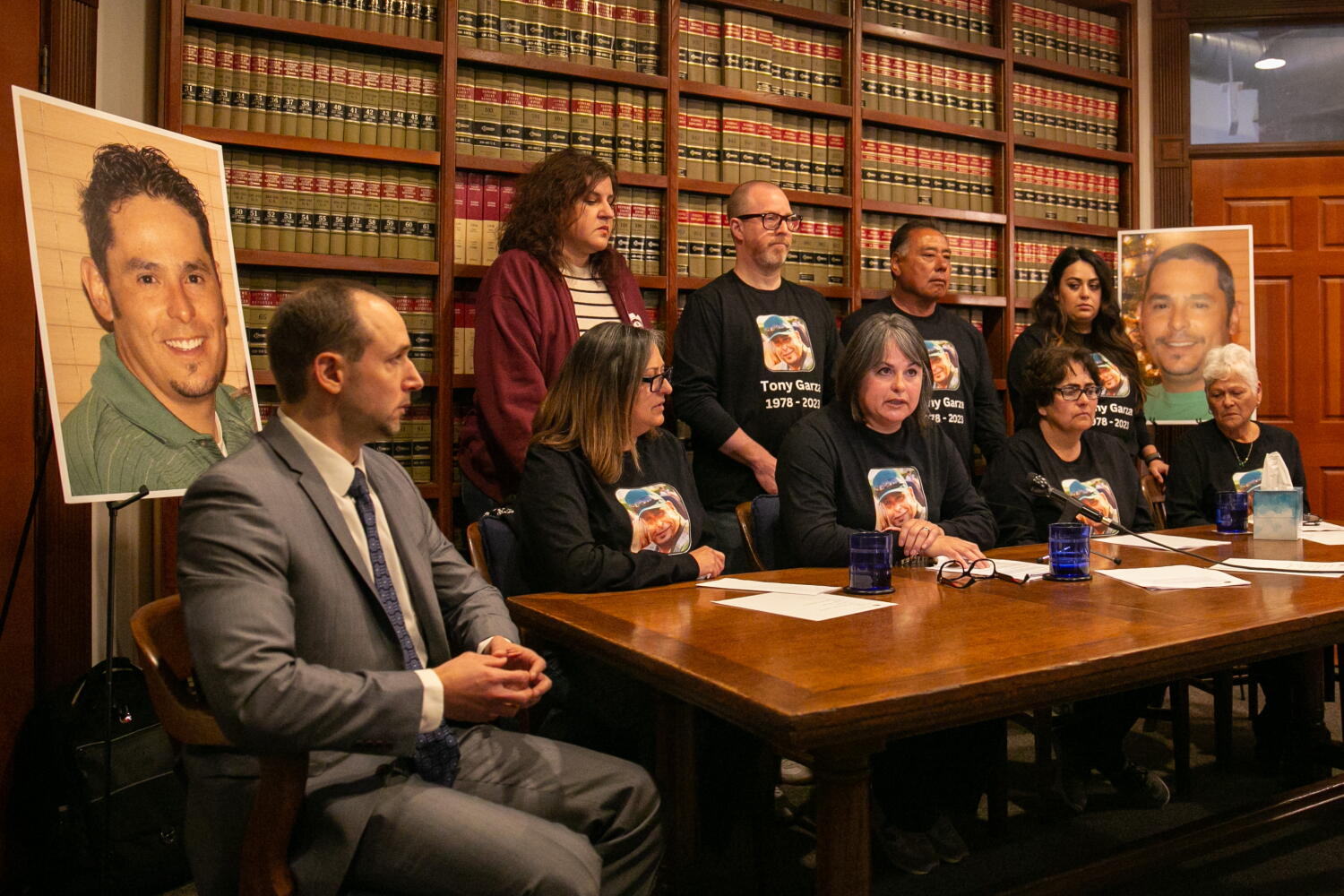
A $51 million federal civil jury verdict against San Bernardino County—awarded to the mother of a mentally ill man fatally shot by sheriff's deputies—represents far more than an isolated legal defeat. Under the framework of municipal risk management and civil rights litigation, massive verdicts of this scale function as market corrections for systemic operational failures. When law enforcement agencies fail to adapt tactical protocols to behavioral health crises, the resulting financial liability transfers the cost of institutional inertia directly onto taxpayers, municipal bond ratings, and public insurance pools.
Standard news coverage treats a $51 million judgment as a human-interest tragedy or a standalone courtroom drama. That framing misses the structural mechanics driving the outcome. Federal juries do not arrive at eight-figure valuations in wrongful death and Fourth Amendment excessive force suits by accident. They calculate these figures when plaintiffs successfully prove a causal chain linking individual tactical errors on the street to systemic policy deficits at the command level.
The Anatomy of Municipal Liability Under Section 1983
To understand how a single fatal encounter generates a $51 million liability, one must examine the architecture of federal civil rights litigation, specifically 42 U.S.C. § 1983. Individual deputies are frequently shielded by qualified immunity, a legal doctrine protecting government officials from personal financial liability unless their conduct violates clearly established statutory or constitutional rights. However, when a plaintiff pierces that shield—or establishes municipal liability under the Monell doctrine—the financial exposure shifts to the county itself.
Under Monell v. Department of Social Services, a local government cannot be held liable solely because it employs a tortfeasor. Instead, plaintiffs must demonstrate that the constitutional violation resulted from an official policy, an unofficial custom, or a deliberate indifference in training and supervision. In cases involving individuals experiencing acute psychiatric distress, the legal battleground centers on three primary variables:
- Objective Reasonableness Under Graham v. Connor: Juries evaluate whether the use of deadly force was objectively reasonable from the perspective of a reasonable officer on the scene, accounting for the severity of the crime, whether the suspect posed an immediate threat, and whether the suspect was actively resisting or attempting to evade arrest. When a subject is unarmed or armed only with a non-firearm object while exhibiting obvious signs of severe mental illness, the "immediate threat" calculus undergoes intense scrutiny.
- Pre-Seizure Tactical Conduct: In the Ninth Circuit—which governs federal courts in California, including San Bernardino County—juries are permitted to examine whether officers recklessly or intentionally provoked a violent confrontation through poor tactical positioning. Closing distance rapidly, cornering a paranoid individual, or failing to utilize available cover eliminates the time and space required for de-escalation, artificially manufacturing the very threat later cited to justify lethal force.
- Failure to Train as Deliberate Indifference: Securing a $51 million verdict typically requires proving that county leadership knew its deputies routinely encountered individuals in psychiatric crisis, knew that standard compliance-based policing tactics escalated those encounters into lethal confrontations, and failed to implement mandatory Crisis Intervention Team (CIT) protocols.
The Tactical Mismatch in Behavioral Health Encounters
Conventional law enforcement training is built on an escalation-of-force continuum designed for rational actors responding to deterrence. An officer issues a loud, authoritative command; a rational suspect complies to avoid physical coercion or arrest.
When applied to an individual experiencing acute psychosis, paranoid delusions, or severe cognitive impairment, this operational model breaks down entirely. Auditory hallucinations, sensory overload, and neurological panic prevent the subject from processing rapid-fire commands. Standard police tactics—such as shouting contradictory orders, pointing firearms, or advancing in formation—trigger a primal fight-or-flight response in a brain already untethered from reality.
This creates an acute operational bottleneck. Deputies trained to establish immediate physical control interpret non-compliance as willful defiance or imminent aggression. Simultaneously, the person in crisis perceives uniform-clad personnel issuing aggressive commands as lethal attackers. Without tactical deceleration—stepping back, utilizing barriers, lowering voices, and waiting for specialized behavioral health clinicians—the encounter compresses into a fraction of a second where deadly force becomes virtually inevitable.
Quantifying the Cost Function of Unmitigated Risk
From a purely fiscal perspective, municipal governments routinely miscalculate the cost function of policing reform. Command staffs and county boards of supervisors often view comprehensive crisis intervention training, co-responder mental health units, and non-lethal containment technologies as discretionary budget expenses. In reality, they are capital investments in liability mitigation.
The true cost of a fatal officer-involved shooting extends well beyond the headline figure of a jury verdict. A rigorous accounting of municipal liability includes four distinct financial drains:
- Direct Damages and Statutory Attorney Fees: Under 42 U.S.C. § 1988, prevailing plaintiffs in civil rights lawsuits are entitled to recover reasonable attorney fees from the losing municipality. In multi-year federal litigation involving extensive discovery, expert witnesses, and trial preparation, plaintiff legal fees alone routinely add $3 million to $8 million on top of the jury's compensatory and punitive awards.
- Defense Litigation Overhead: Counties spend millions retaining specialized outside civil rights defense firms, funding accident reconstructionists, and paying police practices experts long before a jury is ever empaneled.
- Self-Insured Retention and Excess Insurance Premiums: Large counties like San Bernardino operate primarily through self-insurance funds backed by excess liability carriers. A $51 million hit exhausts local reserve pools immediately, forcing the county to draw down general fund reserves earmarked for infrastructure, public health, or personnel. Excess insurers subsequently re-rate the county's risk profile, resulting in steep annual premium hikes or coverage exclusions for law enforcement operations.
- Post-Trial Leverage and Appeal Costs: While counties frequently file post-trial motions for remittitur—asking the judge to reduce an excessive award—or appeal to the Ninth Circuit, appellate bonds and ongoing statutory interest accrue daily. Even if a $51 million verdict is negotiated down to $25 million or $30 million to avoid appellate uncertainty, the net capital loss remains catastrophic for a county budget.
Systemic Vulnerabilities in Inland Empire Policing
San Bernardino County presents a uniquely complex operational environment. Spanning over 20,000 square miles, it is the largest county by area in the contiguous United States, encompassing dense urban corridors alongside vast, isolated desert communities. This geographic sprawl creates severe resource asymmetry in behavioral health response.
While metropolitan centers have increasingly deployed mobile crisis teams—pairing unarmed clinicians with specialized deputies—response times across sprawling jurisdictions remain uneven. When patrol deputies arrive first on a behavioral health call without immediate clinical backup, they fall back on default patrol habits. Furthermore, high call volumes create institutional pressure to clear scenes rapidly. De-escalation requires time; patrol metrics often reward speed. When organizational incentives prioritize rapid call resolution over containment and patience, deputies are structurally nudged toward premature physical engagement.
Compounding this issue is the chronic underfunding of inpatient psychiatric facilities across California. With state hospital beds scarce and outpatient safety nets fractured, county sheriff's departments have become the de facto front line for acute psychiatric emergencies. Deputies are tasked with managing complex medical crises with tools designed for criminal interdiction.
Structural Mechanics of Verdict Valuation
Why did this specific jury reach $51 million rather than a more conventional $5 million to $10 million wrongful death settlement? Verdict escalation in California federal courts follows identifiable mechanics:
First, California's Code of Civil Procedure was amended under Senate Bill 447 to allow plaintiffs in survival actions to recover damages for a decedent's pre-death pain, suffering, and disfigurement. Previously, if a victim died instantly or before judgment, those non-economic damages evaporated, creating a perverse financial incentive where killing a suspect was less expensive for a municipality than severely injuring them. Today, juries can assign massive dollar values to the terror and physical agony experienced by a victim in the minutes or seconds preceding death.
Second, loss of familial relationship claims—brought by a surviving parent—allow juries to quantify the permanent destruction of a core human bond. When plaintiffs present compelling evidence that a mother actively sought help for her mentally ill son, only to have the state respond with lethal force, juror outrage translates directly into elevated non-economic multipliers.
Third, punitive damages against individual deputies—or massive compensatory awards designed to send an institutional message—occur when trial evidence reveals internal cover-ups, inconsistent deputy testimony, or a failure by internal affairs to discipline clear policy violations. Juries punish institutional dishonesty far more severely than honest operational mistakes.
Strategic Limits of Reform
Addressing this crisis requires acknowledging the operational limits of current reform models. No single policy change eliminates the risk of fatal encounters during acute behavioral crises.
Mandating a 40-hour Crisis Intervention Team course for all patrol deputies, while helpful, often suffers from skill decay if not reinforced through quarterly scenario-based stress inoculation. Classroom instruction evaporates under acute adrenaline surges unless muscle memory is rewired through high-fidelity simulation training.
Similarly, non-lethal weapons—such as conducted energy devices (Tasers), beanbag shotguns, and 40mm foam launchers—carry high failure rates in dynamic encounters. Thick clothing, missed probes, or acute physiological agitation frequently render less-lethal tools ineffective, leaving deputies with no intermediate option if they have already closed distance with a subject.
Finally, unarmed mobile crisis teams cannot safely enter scenes involving active weapons or severe physical violence without law enforcement perimeter support. Complete decoupling of police from mental health calls works for non-violent welfare checks, but hybrid co-response models remain necessary for high-acuity situations.
Institutional Recalibration
To arrest this trajectory of escalating multi-million-dollar verdicts, county leadership and sheriff's command staffs must treat use-of-force reform as an urgent fiduciary obligation rather than a public relations exercise.
First, patrol dispatch protocols must be re-engineered to triage behavioral health calls away from standard patrol units whenever immediate violence is absent, deploying dedicated co-responder teams equipped with clinical background data. Second, tactical doctrine must formally codify "tactical repositioning" as a mandatory standard of care—requiring deputies to withdraw, establish distance, and utilize physical barriers when facing an armed or agitated individual in psychiatric crisis, rather than advancing to force compliance. Third, county risk managers must integrate litigation payouts directly into departmental budget accountability, ensuring that command staffs bear the fiscal consequences of training deficits. Until the internal institutional cost of a preventable fatal shooting exceeds the administrative effort required to overhaul patrol tactics, taxpayers will continue funding eight-figure jury verdicts.