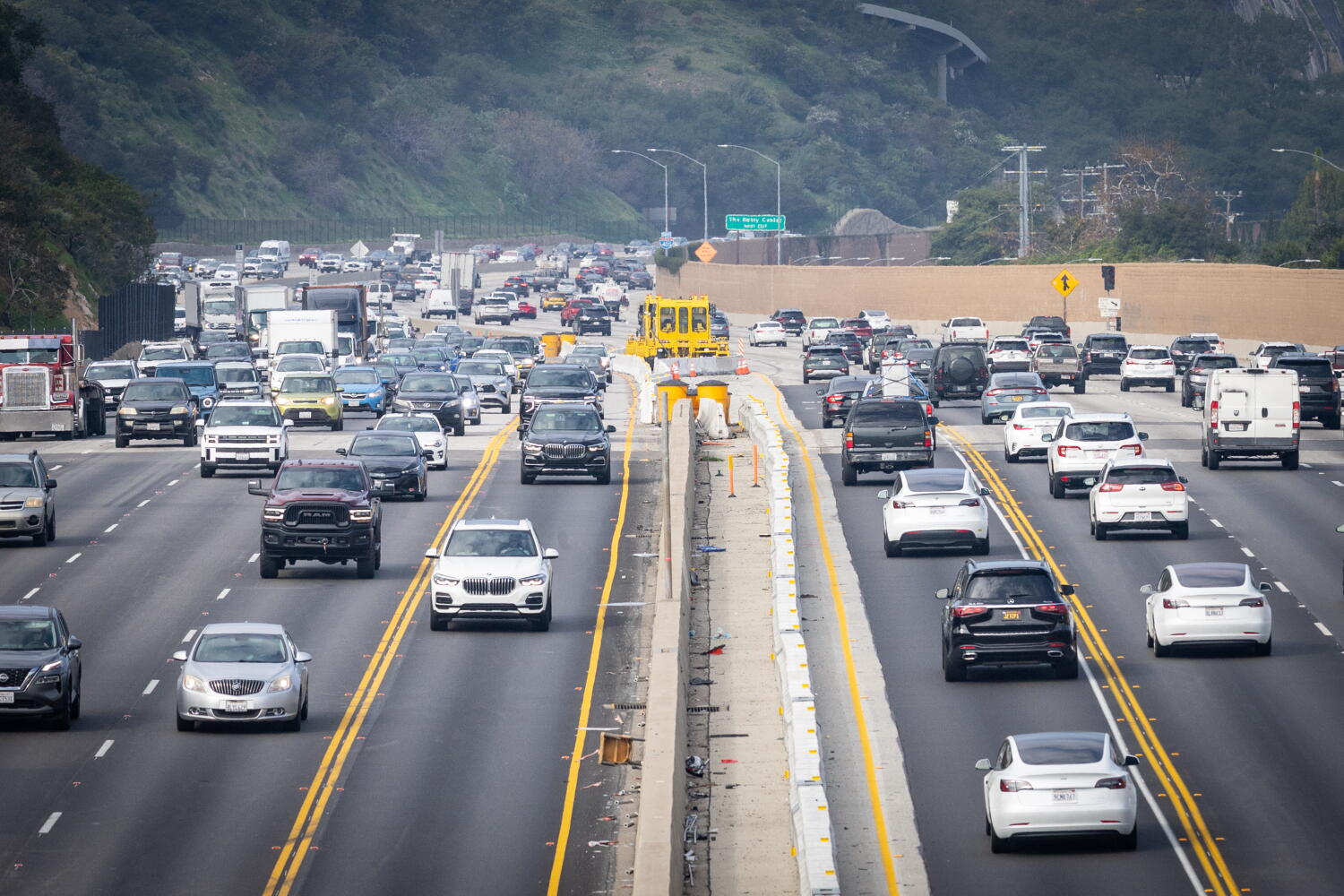
Imagine driving down one of the busiest corridors in Los Angeles, glancing up at an electronic highway sign, and seeing a direct threat from a foreign regime flashing back at you.
That is exactly what happened on the Interstate 405 near the Santa Monica Boulevard exit, right next to the heart of LA's thriving Persian community. A digital traffic sign was hijacked to display a web address linked to a campaign targeting Iranian dissidents. While cybersecurity experts quickly pointed out that breaking into a roadside matrix sign doesn't require elite nation-state hacking skills, dismissing it as a simple prank misses the entire point. The goal wasn't to cripple municipal transit networks. The goal was pure, unadulterated psychological warfare.
The Anatomy of a Low-Tech Disruption
Roadside electronic message signs are notoriously easy targets if physical or digital security hygiene slips. Often managed by third-party contractors or left with default factory credentials, these orange-text matrix boards are built for utility, not fortress-grade cyber defense.
The intruders didn't need zero-day exploits or complex malware to alter the display. They needed basic administrative access or credentials left exposed. For days, the unauthorized message sat in plain sight along a vital Southern California artery, flashing users toward a domain associated with intimidation campaigns.
Security analysts refer to this specific brand of intrusion as perception hacking. You gain minimal entry to a minor system, broadcast your presence loudly, and let human psychology do the heavy lifting. When people thousands of miles away from a hostile government see their local infrastructure hijacked to broadcast surveillance lists or threatening slogans, the physical distance suddenly feels irrelevant.
Targeting the Diaspora
The real threat of the 405 incident isn't about traffic management systems; it's about transnational repression. The hacked website directed drivers toward domains featuring what operators called a "Burn List". This list featured names, photographs, and personal information of political dissidents, activists, and journalists living abroad.
For members of the Iranian diaspora in Los Angeles, discovering personal data exposed on state-linked channels brings an immediate sense of vulnerability. Local residents who fled authoritarian rule suddenly realized that their neighborhood streets could double as billboards for intimidation. It forces people to look over their shoulders in a city they chose for its safety.
This digital intrusion didn't happen in a vacuum. Federal agencies and cybersecurity firms have repeatedly warned about a broader playbook involving spear-phishing, spyware distribution via messaging apps, and surveillance campaigns designed to silence opposition voices overseas.
What Municipalities Must Fix Now
Cities rely heavily on automated infrastructure to keep traffic flowing, but convenience often trumps security. Roadside signs, water treatment valves, and smart grid sensors are frequently networked without adequate segmentation.
If an attacker can manipulate a public traffic sign to broadcast foreign propaganda, the vulnerability extends far beyond hurt feelings or traffic confusion. Securing these assets requires basic, unglamorous hygiene:
- Enforcing strict multi-factor authentication for all contractor management portals.
- Regularly auditing access logs on edge devices.
- Isolating public-facing utility hardware from broader corporate or municipal networks.
Ignoring these physical-digital hybrids leaves local infrastructure wide open to geopolitical posturing.
Take security notices seriously and verify that local transit authorities are actively rotating administrative credentials on all remote displays today.
Sign on 405 Freeway Hacked to Display Iranian Regime Website
This short video clip provides a firsthand look at the hacked digital sign on the Los Angeles freeway that sparked widespread concern among local drivers and the Iranian diaspora.