The rain in Canberra has a way of making everything look gray, heavy, and permanent. Inside the glass-and-steel corridors of Russell Offices—the nerve center of Australia’s Department of Defence—the mood recently has matched the weather. Bureaucrats stare at projection screens, tracing the lines of a deal so massive it threatens to swallow the nation’s foreign policy whole.
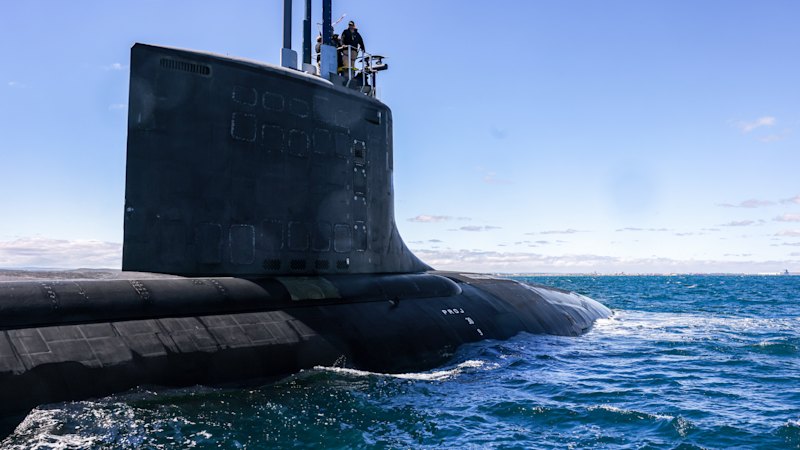
On paper, the AUKUS agreement is a triumph of modern statecraft. Australia, the United States, and the United Kingdom binding themselves together in a trilateral security pact. The centerpiece? A fleet of nuclear-powered attack submarines destined for the Royal Australian Navy. The price tag? Up to $368 billion over the next three decades.
But look past the sterile press releases and the orchestrated handshakes on naval bases. Look at the people who actually have to build, fund, and justify this leviathan. That is where the friction lives.
For months, whispers of discontent have rippled through Washington and Canberra. The Americans are nervous. The Australians are defensive. A series of political spats over technology sharing, supply chains, and sovereign capability have revealed a uncomfortable truth.
The United States bought into the vision, but they still do not entirely trust Australia to deliver.
The Ghost in the Shipyard
To understand why Washington is sweating, you have to leave the policy think tanks and stand on the concrete apron of the Osborne Naval Shipyard in South Australia.
Imagine a welder named Tom. He represents the thousands of skilled tradespeople Australia needs to find, train, and retain to make AUKUS a reality. Tom is highly skilled, but he has never worked on a nuclear reactor. No one in Australia has. The country has a single, small research reactor at Lucas Heights, used for creating medical isotopes. It does not possess a domestic nuclear power industry.
Now, consider the American perspective. A U.S. Navy admiral sitting in the Pentagon looks at Tom and sees a vulnerability.
The United States guards its naval nuclear propulsion technology with a fierce, almost religious intensity. For seventy years, since the days of Admiral Hyman Rickover, that technology has been the crown jewel of American military supremacy. It is a secret shared only once before, with the British in 1958.
The American anxiety is not about Australia’s loyalty. It is about capacity.
Washington looks at Australia's shifting political cycles and wonders if a future government will lose its nerve when the bills start piling up. They look at Australia’s strict anti-nuclear sentiment—historically woven into the fabric of the nation's left-leaning politics—and worry about stability.
Every time an Australian politician steps to a microphone to reassure voters that these submarines will not lead to a domestic nuclear power industry, a red flag goes up in Washington. To the Americans, it sounds like a country trying to have its cake and eat it too. They ask a simple, devastating question: How can you safely operate and maintain the most complex machines on earth while remaining culturally allergic to the science that powers them?
The Red Tape Stranglehold
The friction is not just cultural. It is deeply bureaucratic.
For decades, Australian defense tech companies have collided with a monster known as ITAR—the International Traffic in Arms Regulations. This is the American regulatory framework designed to prevent sensitive technology from falling into the wrong hands. In practice, it treats closest allies with the same clinical suspicion as foreign adversaries.
An Australian engineer working on a joint project cannot look at a specific blueprint without a mountain of paperwork cleared in Washington. If a component breaks, it often cannot be repaired locally; it must be shipped back to the U.S., wrapped in security protocols.
[American Tech Secrets] ──(ITAR Red Tape)──> [Australian Shipyards]
                                                  │
                                          (The Execution Gap)
                                                  ▼
                                      [Delayed Submarine Fleet]
The U.S. Congress has promised reforms to create an "ITAR-free" bubble for AUKUS. But bureaucracy has a life of its own. It resists change. American lawmakers, driven by a desire to protect their own industrial base and intellectual property, are dragging their feet.
This creates a profound sense of whiplash in Canberra. Australia is committing hundreds of billions of dollars, fundamentally altering its strategic posture in Asia, and tying its geopolitical destiny to Washington for the next half-century. Yet, Australian officials still find themselves sitting in waiting rooms, begging for export licenses.
It feels less like a partnership of equals and more like a client state awaiting instructions.
The Weight of the Multiplier
Numbers that large lose their meaning. $368 billion. It sounds abstract, like a distance measured in light-years.
To bring that number down to earth, look at the trade-offs. Australia is a nation of twenty-six million people. Its economy is robust, but it is not infinite. Every dollar spent on a pressure hull in Adelaide is a dollar that cannot be spent on hospitals in Brisbane, schools in Melbourne, or regional roads in Western Australia.
The opportunity cost is staggering.
The public support for AUKUS is fragile because the strategic argument has been delivered in the cold language of deterrence and geopolitics. The average citizen hears about "denial capability" and "chokepoints in the South China Sea." What they do not hear is how this sacrifice improves their daily life.
The political class in Canberra assumed the sheer gravity of the geopolitical threat would be enough to sustain public consensus. They underestimated the exhaustion of a populace dealing with inflation, housing crises, and crumbling infrastructure.
When news breaks of another delay in Washington, or another piece of legislation stalled in the U.S. Senate, the Australian voter does not just see a diplomatic hiccup. They see their money disappearing into a black hole of foreign policy ambition.
The Invisible Stakes
Why does this matter so much? Because the alternative to success is catastrophic for both nations.
If AUKUS fails—if it dissolves into a mess of cost overruns, political recrimination, and missed deadlines—the damage will be irreversible. Australia will have retired its aging Collins-class submarines without a viable replacement, leaving a massive gap in its maritime defense. The United States will have signaled to the entire Indo-Pacific that it cannot deliver on its most ambitious strategic promises.
The stakes are not hidden in the future. They are being felt right now in the diplomatic offices of Beijing, Tokyo, and Jakarta. Everyone is watching this slow-motion test of wills.
The spats we are witnessing are not minor disagreements over contract clauses. They are the growing pains of an old alliance trying to transform into something entirely new. For seventy years, the ANZUS treaty was built on a simple premise: Australia sends troops to support American wars, and the U.S. extends its security umbrella over the continent.
AUKUS demands something different. It requires the integration of industrial bases, the sharing of sacred tech secrets, and a level of mutual trust that neither nation has ever practiced before.
The Unspoken Conversation
The real problem lies in what remains unsaid.
Australian officials need to stop treating the alliance as a magic shield that requires no maintenance. They have to demonstrate, through policy and action, that they possess the industrial grit and the political stamina to carry their share of the load. They need to explain to their own people, without euphemisms, exactly what risks this country is taking.
Conversely, the United States needs to realize that an ally treated like a junior partner will eventually start acting like one. If Washington expects Canberra to stand on the front line of a changing Pacific, it must hand over the keys to the technology required to do the job. Trust cannot be rationed.
The rain eventually stops in Canberra, leaving the capital cold and clear under a vast southern sky. The decisions made in those quiet rooms over the coming months will reverberate long after the current crop of politicians has left the stage.
The blueprints for the new submarines remain rolled up on desks, waiting for the ink to dry on agreements that money alone cannot buy. The steel has not yet been cut. The reactors have not been built. For now, the entire multi-billion-dollar enterprise rests not on technology, or weapon systems, or industrial might, but on something far more fragile.
It rests on the ability of two cultures to look across the ocean, see past their own anxieties, and finally believe what the other is saying.