The Los Angeles City Council has officially tapped the brakes on a landmark proposal that would have set a $30-per-hour minimum wage for hotel and airport workers. While the initial push for the "Tourism Worker Wage" ordinance was framed as a necessary lifeline for laborers in one of the most expensive cities on Earth, the Council’s recent decision to order an economic impact study is a calculated stall tactic. This move doesn't just delay a paycheck; it signals a massive shift in how the city balances the demands of powerful labor unions against the warnings of a tourism industry that claims it is still reeling from the pandemic.
The Math Behind the Stalling Tactics
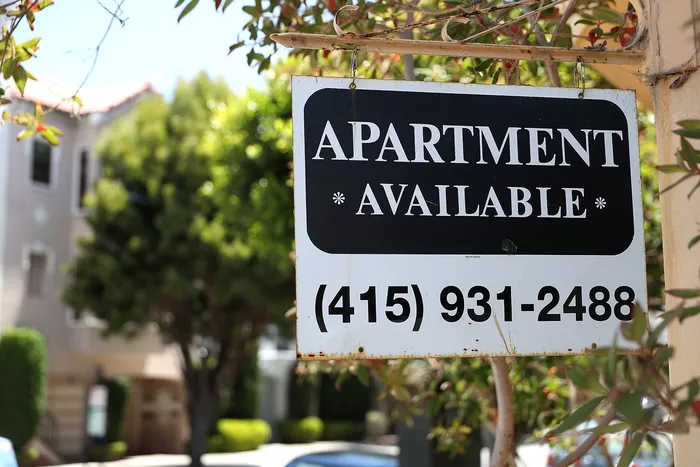
For the workers at Los Angeles International Airport (LAX) and the city’s major hotels, the $30 figure isn't an arbitrary number. It was calculated to address the "living wage" gap in a region where the average rent for a one-bedroom apartment now clears $2,500. However, the City Council is now hiding behind the need for "further data." By requesting a comprehensive economic analysis, the Council has effectively pushed any potential implementation past the immediate legislative calendar.
This is a classic political maneuver. When a policy carries significant risk for the business community, the most effective way to kill it without appearing anti-worker is to study it to death. The Council wants to know if a $30 floor will trigger a mass exodus of conventions or if hotels will simply automate front-desk roles to offset the costs.
The reality is that LA is currently a city of two extremes. On one side, you have a hospitality sector that saw record-breaking room rates in 2023. On the other, you have the people cleaning those rooms who often commute two hours because they cannot afford to live within thirty miles of their workplace.
The Pressure from the Hospitality Lobby
The American Hotel and Lodging Association and various local chambers of commerce have been relentless. Their argument is simple: a 60% increase in the minimum wage—rising from the current $19.73 for many of these workers—would be a "death knell" for mid-tier hotels. They argue that Los Angeles would become an island of high costs, driving tourists to neighboring Anaheim or Santa Monica.
But let’s look at the actual numbers. Labour costs in the hospitality industry typically hover between 30% and 35% of gross revenue. A jump to $30 an hour would shift that metric significantly. If a hotel cannot raise its room rates further without losing customers, that money has to come from the bottom line. For institutional investors who own these properties, a dip in Profit and Loss (P&L) performance is unacceptable.
The industry isn't just worried about the $30 mark. They are worried about the compression effect. If a housekeeper makes $30, the supervisor who previously made $28 now needs $38. The dishwasher makes $30, so the line cook wants $40. It’s a cascading financial commitment that the industry claims will lead to bankruptcy for smaller operators.
Union Leverage and the 2028 Olympics
UNITE HERE Local 11, the powerhouse union representing these workers, isn't backing down. They view the upcoming 2026 World Cup and the 2028 Olympic Games as the ultimate leverage. The city knows it cannot host these global events if the airport is paralyzed by strikes and the hotels are empty of staff.
The union’s perspective is that the city’s "tourism engine" is fueled by poverty wages. They point to the billions of dollars in public investment going into LAX and the surrounding infrastructure. If the public is subsidizing the hardware of tourism, the union argues, the public should ensure the software—the workers—can afford to eat.
The Overlooked Impact on LAX Operations
While the hotel debate grabs the headlines, the airport situation is perhaps more volatile. LAX is a city within a city. The workers there aren't just baggage handlers; they are the security screeners, the cabin cleaners, and the concession staff who keep the gears turning.
If the $30 wage is delayed indefinitely, the airport faces a retention crisis. We have already seen what happens when ground handling crews are understaffed: lost luggage, delayed flights, and a general decay in service quality. The city’s "study" needs to account for the cost of high turnover. It costs thousands of dollars to recruit, background check, and train a new airport employee. Keeping a seasoned worker at $30 an hour might actually be cheaper than the constant cycle of hiring at $20.
The Economic Ripple Effect
Critics of the wage hike often cite the "wage-price spiral," an economic theory where higher wages lead to higher prices, which lead back to higher wage demands. It is a terrifying prospect for a city already struggling with inflation.
However, there is another side to the coin. When low-wage workers get a raise, they spend it immediately and locally. Unlike the dividends paid to out-of-state hotel owners, a $30 wage for an LAX worker stays in the Los Angeles economy. It goes to the local grocery store, the neighborhood mechanic, and the landlord.
The City Council is currently caught between these two economic philosophies. They are trying to please the donors who fund their campaigns while keeping the peace with the unions that provide their ground game during elections.
Displacement and the Housing Connection
We cannot talk about the $30 wage without talking about the homelessness crisis. A significant portion of the city’s unhoused population is actually employed. They are the "working poor" who live in cars or shelters because the gap between their paycheck and the median rent is an unbridgeable chasm.
If the Council continues to delay this wage increase, they are indirectly subsidizing the housing crisis. When a full-time worker cannot afford a roof, the city ends up paying for it through social services, emergency room visits, and temporary housing programs. The $30 wage is, in many ways, a shift of responsibility from the public sector back to the private employers.
The National Precedent
What happens in Los Angeles rarely stays in Los Angeles. If the $30 threshold is crossed, it sets a new benchmark for labor negotiations across the United States. San Francisco, Seattle, and New York are watching closely.
The "delay" is a signal to other cities that the pushback from the business community is working. It provides a blueprint for how to stall radical labor shifts:
- Express "concerns" about the economy.
- Commission a study that will take six to twelve months.
- Wait for the political momentum to die down or for a new news cycle to take over.
The Reality of the "Study"
The Council has tasked the Economic and Workforce Development Department to report back. But what can a study tell us that we don't already know? We know that costs will go up for businesses. We know that quality of life will go up for workers. The "data" isn't the issue; the political will is.
The Council members are currently looking for a middle ground—perhaps a tiered phase-in that reaches $30 by 2028, or a series of exemptions for smaller businesses. But for the worker currently choosing between a bus pass and a meal, a "phased-in" approach over five years is cold comfort.
The hospitality industry is gambling that the unions will blink first. They are betting that the threat of automation—kiosks replacing check-in desks and robots delivering room service—will scare workers into accepting a lower number. But you cannot automate the loading of a Boeing 747, and you cannot automate the cleaning of a bathroom to the standards expected by a $500-a-night guest.
The Bottom Line for Los Angeles
The city is at a crossroads. It wants to be a "world-class" destination, but it is built on a foundation of labor that can no longer afford to live within its borders. The delay in the $30 wage isn't a neutral act of due diligence. It is a choice to maintain the status quo at a time when the status quo is clearly broken.
The coming months will see a flurry of "findings" and "reports" released by the city. Each one will be parsed by lobbyists and union leaders alike. But the fundamental question remains: can Los Angeles remain a functional city if its essential workers are priced out of existence?
The Council might think they are buying time, but they may find that time is the one luxury the city’s workforce no longer has. If the 2026 World Cup arrives and the city is mired in labor strife because of these delays, the "economic impact" will be far worse than a $30 wage ever could have been.
Business owners need to prepare for the reality that the floor is rising. Whether it happens this year or next, the era of sub-$25 labor in major metropolitan hubs is ending. The companies that survive will be the ones that stop fighting the inevitable and start figuring out how to build a business model that treats labor as a core investment rather than a line-item expense to be minimized.
The delay is a pause, not a stop. The pressure is building, and the valve is starting to hiss.