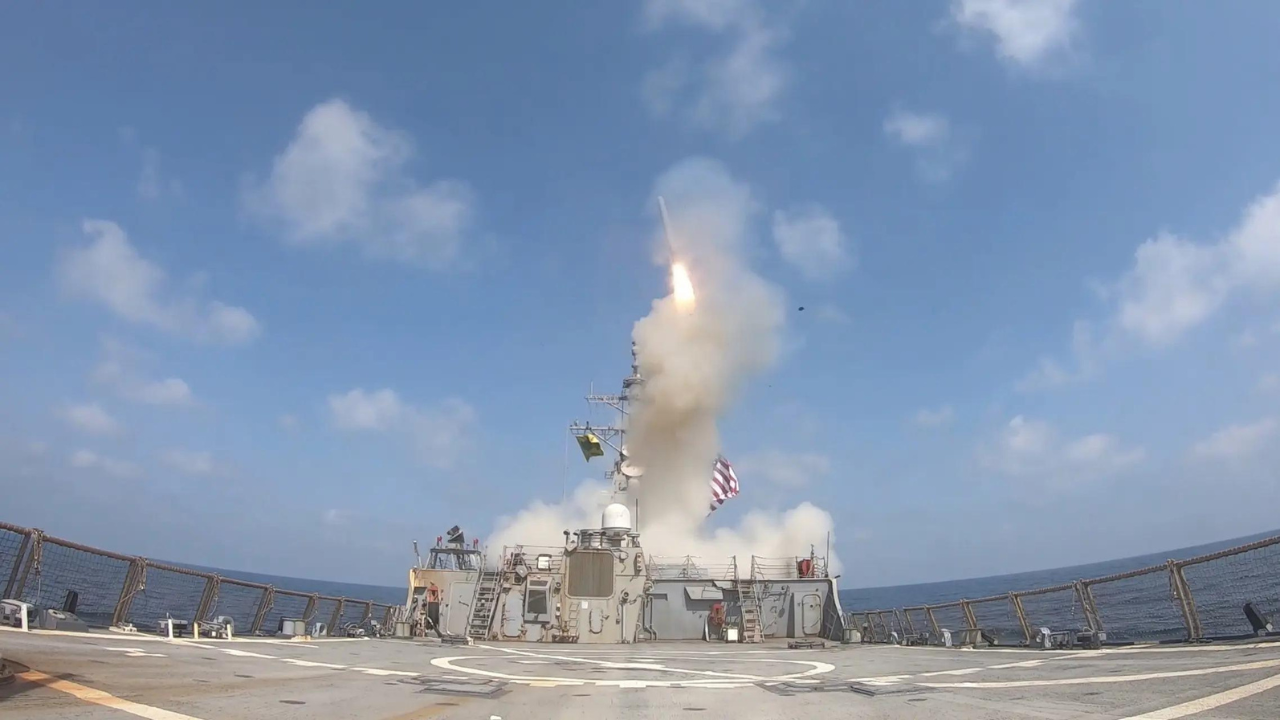
The world watched in a state of collective shock as the images of a flattened Iranian compound began to circulate. We aren't talking about a surgical strike or a single drone hitting a specific vehicle. This was a 30-bomb barrage. It was an overwhelming display of kinetic force designed to ensure that absolutely nothing—and no one—survived within the perimeter. When the dust finally settled, the news confirmed what the scale of the explosion already suggested. The Ayatollah was dead.
This wasn't just another chapter in the long-standing tensions involving Iran. It was a definitive, violent pivot point. If you've been following the escalation in the Middle East, you know the "shadow war" has been played with a certain set of unspoken rules for decades. Those rules are gone now. The sheer intensity of using thirty high-yield munitions on a single residential and administrative site signals a move from deterrence to total elimination.
The Mechanics of an Overwhelming Strike
To understand how a compound that was supposedly a fortress became a crater, you have to look at the physics of the attack. Most people think of a bombing as a single loud bang. In reality, a 30-bomb barrage is a synchronized sequence. These aren't just random drops. They're timed to create a "pressure wave" effect.
The first few hits are usually designed to strip away the outer layers of a building. They take out the reinforced concrete and the "superstructure." Once the skeletal integrity of the building is compromised, the subsequent bombs penetrate the lower levels. For a figure like the Ayatollah, who likely spent time in reinforced bunkers beneath the surface, this layering is the only way to ensure a "kill."
Military analysts often point to the use of "bunker busters" in these scenarios. These munitions use a delayed fuse. They hit the ground, drill through several meters of earth or concrete, and then explode. When you multiply that by thirty, the ground itself starts to behave like a liquid. The vibration alone is enough to collapse lungs and shatter internal organs, even if the person isn't hit by shrapnel.
Why the Intel mattered more than the Explosives
You can have all the firepower in the world, but it's useless if the target isn't there. This strike tells us one thing clearly. The intelligence breach was absolute. Someone on the inside, or someone very close to the inner circle, gave up the exact coordinates and the exact timing.
In high-security environments like an Iranian leadership compound, the Ayatollah's movements are typically erratic. They don't stick to a public schedule. To catch a high-value target in a specific room at a specific moment requires real-time human intelligence. Signals intelligence—intercepting phone calls or emails—is great, but it has a lag. By the time a jet is over the target, the target has often moved.
This 30-bomb barrage wasn't a "guess." It was a confirmation. It suggests that the attackers had eyes on the ground. They knew the target was in the compound and they knew he wasn't leaving for at least the duration of the flight time of the missiles.
The End of the Proxy Era
For years, Iran operated through proxies. They used groups in Lebanon, Yemen, and Iraq to do the dirty work while the leadership in Tehran remained relatively "untouchable." That was the deal. You hit our proxies, we hit yours, but we don't hit the guys in the turbans or the suits in the capital.
That's over.
By targeting the Ayatollah directly with such massive force, the attackers sent a message to the entire Iranian hierarchy. There is no more "safe" distance. If you are involved in the planning of regional instability, you are a valid target. It's a return to the "decapitation strike" philosophy that we saw during the early stages of the Iraq War, but with much more advanced technology.
What This Means for Regional Stability
Many people fear this will lead to a full-scale "Iran war." It's a valid concern. When a head of state or a supreme religious leader is assassinated, the traditional response is total mobilization. But there's a flip side that few talk about.
When you remove the top layer of a highly centralized, authoritarian regime, you create a vacuum. The people underneath are often more concerned with who's going to take power next than they are with seeking revenge against an outside enemy. We've seen this time and again. Power struggles in Tehran could actually stall a military response.
However, we shouldn't be naive. The Iranian Revolutionary Guard Corps (IRGC) still has its finger on the pulse of various militia groups. Even if the central command is in shambles, the "automatic" response mechanisms—missile batteries and drone swarms—could still be triggered.
The Sophistication of Modern Munitions
We often hear about "smart bombs," but the tech used in this barrage is on another level. We're looking at munitions that can talk to each other mid-flight. They coordinate their arrival times to the millisecond.
- GPS/INS Guidance: This ensures that even if the signal is jammed, the bomb knows where it is based on internal sensors.
- Thermobaric Options: Some of these bombs might have been vacuum-style explosives, which suck the oxygen out of enclosed spaces—deadly for anyone in a bunker.
- Stealth Delivery: The fact that thirty bombs could be dropped without being intercepted by Iranian air defenses suggests a massive failure in their radar systems.
It's likely that a "suppression of enemy air defenses" (SEAD) mission happened simultaneously. You can't just fly a slow bomber over a sovereign nation's capital. This was a complex, multi-layered operation involving electronic warfare to blind the Iranians while the strike package moved in.
The Human Cost and the "Collateral" Reality
Let's be real. You don't drop 30 bombs in an urban or semi-urban compound without "collateral damage." That's the sanitized military term for civilian deaths. The compound was "obliterated." That means everything around it was likely damaged too.
The images of the site show a scene of total desolation. Windows blown out for miles. Buildings leveled. While the focus is on the Ayatollah, the reality of this kind of warfare is that it's messy. It's violent. It's designed to be terrifying. This wasn't a sniper's bullet; it was a sledgehammer.
Immediate Steps to Watch For
If you're trying to track where this goes next, stop looking at the news cycles and start looking at the movements of oil and "dark" ships in the Persian Gulf. Iran's first move is rarely a direct military strike against a superpower; it's usually an economic one.
Watch the Strait of Hormuz. If Iran starts mining that waterway, global oil prices will jump 20% in a single afternoon. That's their leverage. Also, keep an eye on cyber activity. The IRGC has a very capable cyber wing. Expect "wiper" malware to hit financial institutions or power grids in the West as a "low-cost" form of retaliation.
The death of the Ayatollah via a 30-bomb barrage is the loudest "shot fired" in the 21st century. It signals that the era of restraint is officially dead. Whether this leads to a more stable region or a century of chaos depends entirely on who fills the chair in Tehran next week. Don't expect a quiet transition.
Move your assets into "safe haven" commodities like gold or reliable energy stocks if you have skin in the market. The volatility we're about to see hasn't been priced in yet because the world is still in denial about how quickly this can spiral. Check your local news for updates on diplomatic withdrawals. When the embassies start emptying, you know the real "Iran war" is about to begin.