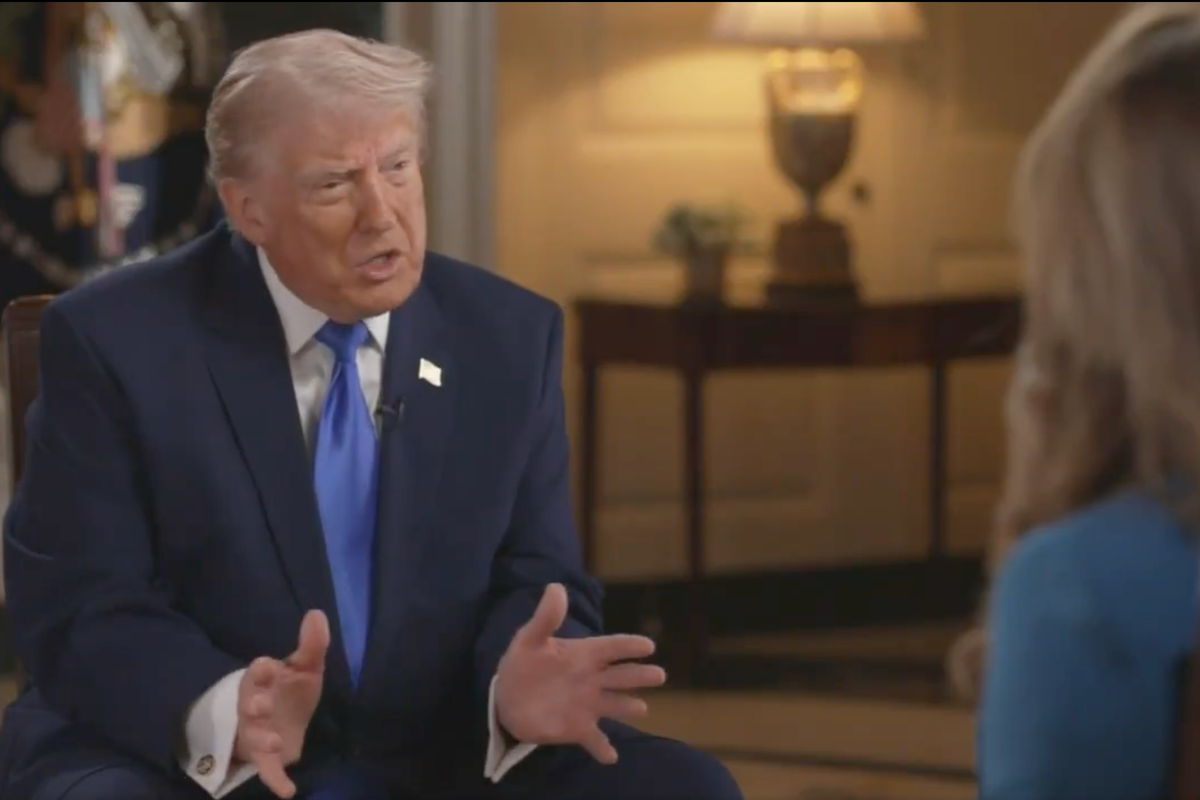
The political world spent a breathless Sunday morning convinced it had witnessed a fundamental transformation of the American psyche. Following the shocking violence at the White House Correspondents’ Dinner—a shooting that shattered the perceived safety of the Washington elite—Donald Trump took to a podium and delivered what many analysts labeled a "speech of love." It was a moment of uncharacteristic restraint, a quiet plea for national unity that seemed to signal a permanent shift in his combative DNA.
Then came Monday.
In less than twenty-four hours, the mask of the statesman didn't just slip; it was violently torn away by the man himself. Through a series of social media blasts and impromptu press interactions, the message of healing was replaced by a familiar, scorched-earth rhetoric. He branded his detractors "disgraces" and returned to the grievance-heavy vernacular that has defined his political identity for a decade. This wasn't a communication breakdown. It was a calculated return to form that proves the "pivot" is not a strategy Trump is capable of maintaining, even under the weight of national tragedy.
The whiplash felt by the public is the result of a fundamental misunderstanding of how the former president views the utility of crisis. To the traditional political operative, a tragedy is a moment to expand the tent. To Trump, it is a brief tactical pause before the resumption of hostilities.
The Mechanics of the Short Term Soften
When the shots rang out at the Washington Hilton, the immediate political atmosphere became radioactive. In those first few hours, the usual partisan bickering was silenced by the sheer gravity of an attack on the press and the presidency simultaneously. Trump’s initial response—the "speech of love"—was a masterpiece of situational awareness. He adopted the tone of a mourning patriarch, using language that stripped away the "enemy of the people" labels he had spent years cultivating.
This wasn't an accident. It was a defensive crouch.
By occupying the moral high ground immediately following the violence, Trump effectively neutralized his critics. They couldn't attack his rhetoric when his rhetoric was, for the first time, indistinguishable from a Sunday morning sermon. It was a strategic deployment of empathy designed to create a buffer zone.
However, the shelf life of this empathy was dictated by the news cycle. As soon as the initial shock began to crystallize into a debate about security failures and political polarization, the "statesman" persona became a liability. To remain in a state of "love" would be to accept a share of the responsibility for the heated climate that preceded the shooting. To pivot back to "disgrace" was to go back on the offensive.
The Psychological Pricing of Outrage
The rapid reversal serves a specific function for Trump’s base. His supporters don't just tolerate his combativeness; they rely on it as proof of his authenticity. When he speaks of unity, he sounds like every other politician they have spent years rejecting. The "speech of love" was a foreign language to his core followers, a dialect of the very "establishment" they believe he is there to dismantle.
By returning to the "disgrace" rhetoric within twenty-four hours, Trump sent a signal to his constituency that the weekend's flirtation with bipartisanship was a temporary necessity, not a change of heart. He reaffirmed that his primary loyalty is to the fight, not the consensus.
There is a measurable rhythm to these outbursts.
- The Event: A crisis occurs that demands a traditional "presidential" response.
- The Compliance: Trump delivers a scripted, teleprompter-heavy address that satisfies the immediate media demand for dignity.
- The Agitation: The constraints of the script begin to chafe as cable news analyzes the "new Trump."
- The Snapback: A social media post or a shouted answer to a reporter breaks the spell, re-establishing the conflict-driven status quo.
This cycle is exhausting for the electorate, but it is oxygen for the Trump campaign. It keeps him at the center of the narrative, forcing both his allies and his enemies to react to his personal temperament rather than the policy implications of the event itself.
The Strategic Failure of the Media Reset
For years, the political press has hunted for the "pivot" like it was a mythological beast. Every time Trump reads a speech without an insult, headlines flourish with questions about whether he has finally "grown into the office." This latest 24-hour cycle should be the final nail in the coffin for that narrative.
The media’s willingness to buy into the "speech of love" is a testament to a collective desire for normalcy. It is easier to report on a reformed leader than it is to report on a leader who uses the language of unity as a tactical smokescreen. When Trump called his opponents "disgraces" only hours after calling for national brotherhood, he didn't just insult his rivals; he mocked the journalists who had spent the previous evening praising his new-found maturity.
The danger of this whiplash is the erosion of meaning. When words like "love" and "disgrace" are used as interchangeable tools for news cycle management, they lose their weight. The public becomes desensitized. If every tragedy is met with a brief period of artificial calm followed by a renewed storm of vitriol, the calm eventually ceases to provide any comfort.
Why the Disgrace Label Still Works
Trump’s use of the word "disgrace" is not a random insult. It is a specific branding tool used to delegitimize any institution or individual that provides a counter-narrative to his own. By labeling the media and his political opponents as a "disgrace" in the wake of a shooting, he reframes the tragedy. The story is no longer about the violence itself; it is about the "disgraceful" way his enemies are using the violence against him.
It is a reversal of the victim-aggressor dynamic.
In this framework, Trump portrays himself as the true victim of the aftermath, regardless of what happened during the event. This allows his supporters to bypass the uncomfortable questions raised by the shooting and return to the familiar comfort of tribal defense. The 24-hour window is the maximum amount of time he can afford to let the national conversation remain focused on anything other than his personal grievances.
The Institutional Cost of Rhetorical Volatility
We are witnessing the complete deconstruction of the "Presidential Response" as an American institution. Historically, in times of national trauma, the President acts as a shock absorber. They take the kinetic energy of a crisis and convert it into a steady, calming presence.
Trump does the opposite. He acts as an amplifier.
By swinging from extreme empathy to extreme hostility in a single day, he ensures that the national psyche remains in a state of high-frequency vibration. There is no time for the public to process the Correspondents' Dinner shooting because they are too busy processing the President's reaction to the reaction. This volatility is not a bug; it is the core feature of his political survival strategy. It prevents the cement from ever drying on a narrative that he doesn't control.
The Breakdown of the 24 Hour Cycle
- Hour 0-6: Immediate response, focus on safety and prayers.
- Hour 6-12: The "Speech of Love," high-level production, focus on unity.
- Hour 12-18: Media praise, "The Pivot" headlines dominate the news.
- Hour 18-24: The Snapback. Insults resume, the "Disgrace" narrative is launched.
This timeline is now a predictable pattern. It has been seen after major policy shifts, international summits, and now, domestic tragedies. The speed of the reversal is increasing because the audience's attention span is decreasing. Trump understands that he only needs to be "presidential" long enough to get the B-roll for his next campaign ad. Once that footage is secured, the persona is no longer useful.
The Illusion of Choice
Voters are often presented with the idea that there are two versions of Donald Trump: the one on the teleprompter and the one on his phone. The reality is that there is only one version, and the teleprompter is merely a costume he wears when the room is too hot.
The "speech of love" was a performance for the middle—the undecided voters and the uneasy donors who want to believe that the chaos can be contained. The "you're a disgrace" rhetoric is the reality for the base. By providing both in a 24-hour window, he attempts to satisfy everyone while being held accountable for nothing.
However, this strategy has a breaking point. You cannot build a stable coalition on a foundation of total unpredictability. The whiplash eventually causes a disconnect that even the most loyal followers cannot bridge. When the rhetoric of "love" is so quickly discarded, it proves that the sentiment was never there to begin with. It was a political commodity, traded away the moment the market moved.
The shooting at the correspondents' dinner should have been a moment of reflection for the entire political class. Instead, it became another theater for the recurring drama of Trump’s temperament. The "disgrace" isn't just the word he used to describe his opponents; it is the fact that the American political discourse is now entirely tethered to the 24-hour mood swings of a single man.
The pivot is dead because the person at the center of it never intended to turn. He is simply spinning in place, and the world is getting dizzy trying to keep up. Stop looking for the change of heart. It is a waste of time. The only thing that changes is the tactic, while the underlying hostility remains the only constant in an increasingly fractured nation.