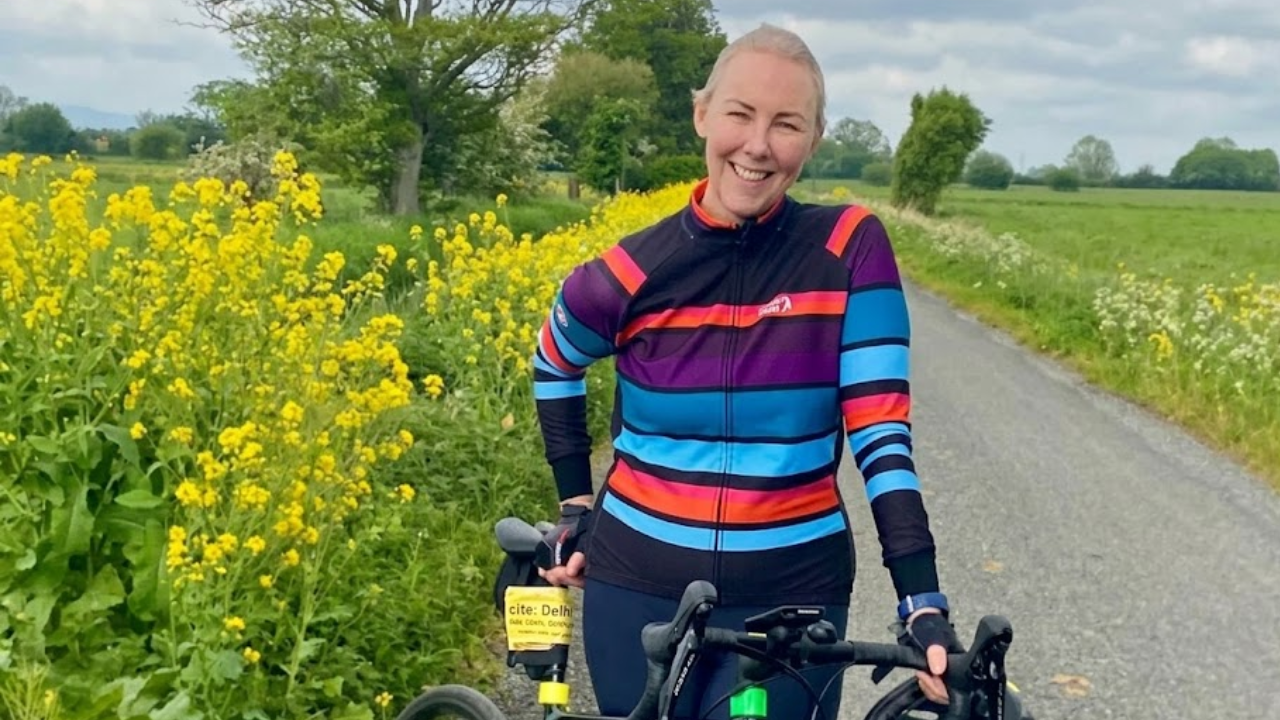
Julie Rose did not intend to become a symbol of medical advancement when she laced up her running shoes to train for a half-marathon. Like many individuals facing a sudden health crisis, her journey began with a misattribution of persistent physical pain. A nagging backache was easily written off as residual wear and tear from a prior hip replacement. It was only when a physical lump materialized in her neck that the reality shifted.
The diagnosis was medullary thyroid cancer, an uncommon and aggressive malignancy originating in the specialized C cells of the thyroid gland. By the time the condition was fully mapped at The Royal Marsden in London, it had already metastasized to her liver and adrenal glands. Standard options were effectively exhausted. Her survival hinged entirely on securing one of roughly ten national slots available for an experimental clinical trial in May 2021.
She rolled the dice. Within six months of beginning the trial medication, her tumors shrank by 60 percent. Some deposits vanished altogether. To express her gratitude to the institution that pulled her back from the brink, Rose recently completed an arduous 186-mile bicycle ride from her home in Bridgwater, Somerset, straight to the doors of The Royal Marsden.
Her story is heartwarming. It is also an accidental portrait of a deeply fractured system.
The Lottery of Access
Every clinical trial functions as a high-stakes lottery. When national slots for advanced therapies can be counted on two hands, the dividing line between survival and palliative decline becomes a matter of geographic fortune, timing, and aggressive self-advocacy.
The public narrative surrounding medical research often focuses on the triumph of the laboratory. Scientists discover a mechanism; pharmaceutical engineers formulate a compound; patients receive a miraculous turnaround. Missing from this sanitized pipeline is the stark rationing of hope.
Clinical trials are not designed to be equitable healthcare delivery systems. They are tightly controlled scientific experiments with stringent inclusion and exclusion criteria. A patient must possess the exact genetic profile, the right performance status, and often the physical proximity to major research hubs to even be considered.
- The Slot Deficit: Phase one and phase two trials routinely accept minuscule patient cohorts to evaluate baseline safety and early efficacy.
- The Referral Bottleneck: Specialized treatments remain concentrated in elite institutions like The Royal Marsden or The Christie, creating massive geographical disparities for patients living in rural or peripheral regions.
- The Eligibility Wall: Minor organ dysfunctions, previous lines of therapy, or minor variations in biomarker expression can instantly disqualify a desperate candidate.
When a patient wins this lottery, the gratitude they feel toward their clinical team is absolute. Yet that gratitude obscures the uncomfortable truth that thousands of other patients with identical diagnoses are turned away simply because the cohort is full.
Beyond the Endurance Narrative
Media coverage of medical milestones defaults predictably to tales of personal heroism. A patient pedals 186 miles. A marathon is run. Funds are raised. These narratives provide a comforting human face to a terrifying disease, wrapping a clinical trial in the cozy language of individual triumph.
This framing lets structural deficiencies off the hook.
Relying on philanthropy and heroic endurance challenges to fund, promote, or validate breakthroughs in oncology creates a distorted economy of care. Research into rare cancers like medullary thyroid carcinoma frequently struggles for commercial backing because the patient pools are too small to guarantee a lucrative return on investment for major pharmaceutical conglomerates.
Consequently, patients are cast not just as medical participants, but as accidental lobbyists and fundraisers. They pedal hundreds of miles not merely to say thank you, but to replenish the coffers of institutions that should be sustained by reliable, systemic public investment.
The Scientific Reality of Experimental Gambles
Behind every successful trial outcome are dozens of quiet failures. For every patient whose tumors regress by 60 percent, multiple others experience disease progression, severe adverse toxicity, or no therapeutic benefit whatsoever.
Rose acknowledged her treatment choice as a deliberate gamble. She weighed the alternative: an older, standard-of-care drug known for debilitating side effects that offered little hope of prolonged remission. The trial offered a cleaner mechanism of action targeting specific molecular pathways, but it came with no guarantees.
This is the frontier of modern precision oncology. Rather than broad-spectrum poisons that carpet-bomb the body's healthy and cancerous cells alike, targeted therapies attempt to jam specific biochemical signals driving tumor growth. When they work, the results look miraculous. When the cancer mutates around the drug, the resistance is swift and absolute.
The medical establishment must reckon with the psychological toll placed on patients who view experimental protocols as their final resort. Hope is a vital clinical variable, but it should not have to function as a substitute for universal access to advanced diagnostics and early-stage intervention.
The Long Road Ahead
The 186-mile journey from Somerset to London concluded on the tarmac outside a hospital. For Julie Rose, the journey represented the physical reclamation of a future that was nearly stolen by stage four cancer. Her scans remain stable. Her life with her partner and three children has resumed.
Yet the machine that saved her continues to turn away far more applicants than it accepts. Celebrating the individual victory is essential, but ignoring the structural lottery underneath keeps the broader crisis safely out of view.