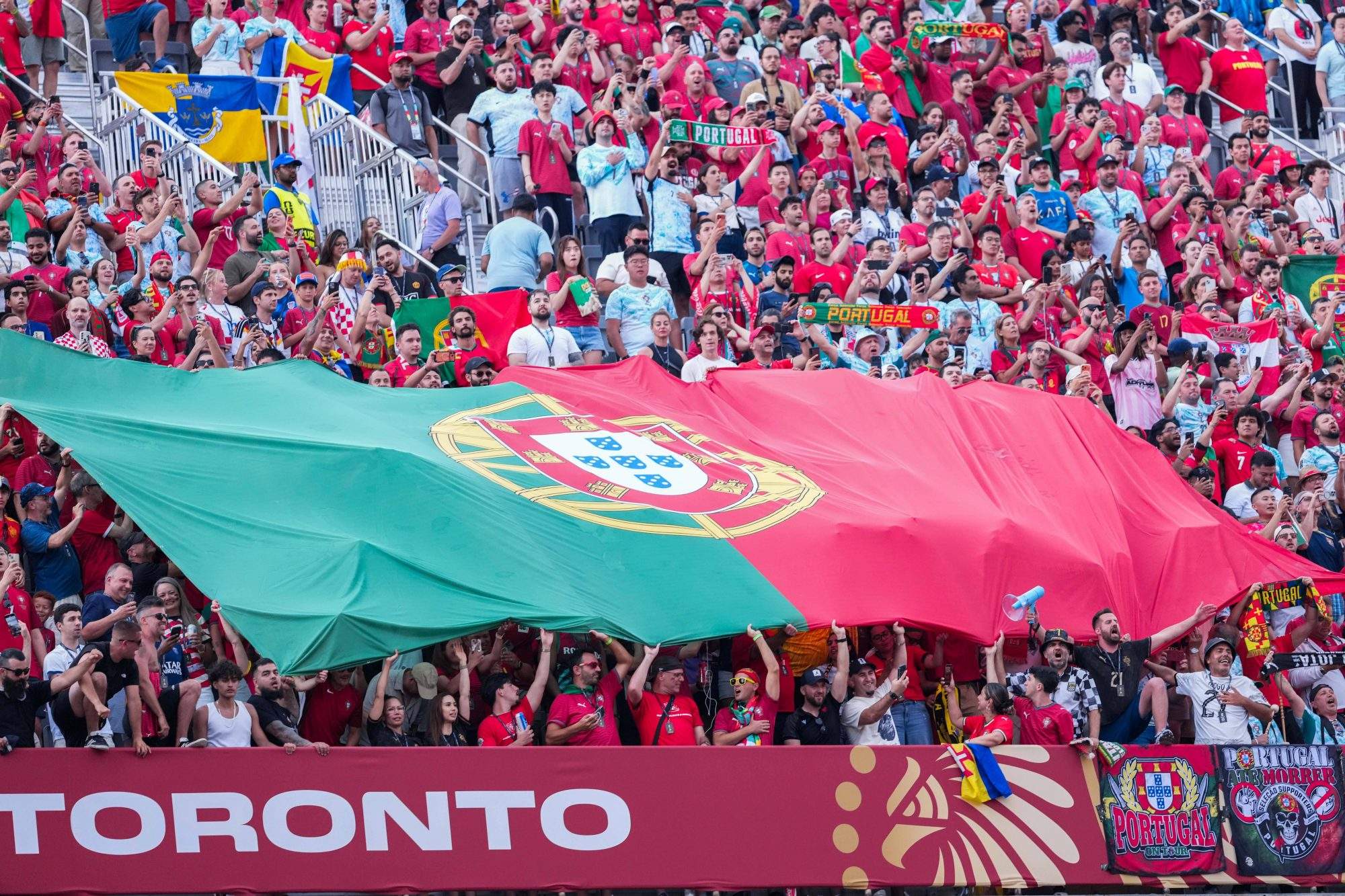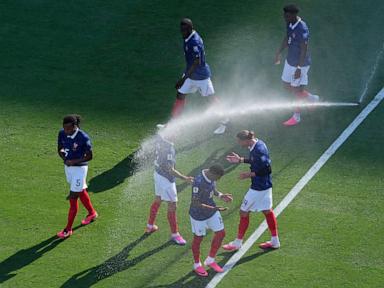
The air inside the stadium does not move. It sits on your chest like a hot, damp wool blanket soaked in radiator water. By 10:00 AM on the fourth of July, the concrete steps of the arena are already radiating a brutal, invisible energy that bakes the soles of your shoes.
Tens of thousands of people are pouring through the turnstiles. They are wearing face paint, waving flags, and chanting under a relentless eastern sun. On paper, this is the pinnacle of the beautiful game—a World Cup match falling precisely on America’s most celebratory summer holiday. It is supposed to be a core memory.
But biology does not care about national holidays. It does not care about broadcasting rights, sold-out venues, or the prestige of a tournament. When the ambient temperature hits 104 degrees Fahrenheit and the humidity locks the air in a suffocating embrace, the human body stops operating as a finely tuned machine. It enters survival mode.
We often view elite athletes as modern gladiators, somehow immune to the physical limitations that plague the rest of us. We expect them to sprint, slide, and collide for ninety minutes, completely detached from the environment around them. It is a dangerous illusion.
The Hidden Breaking Point
Consider a hypothetical midfielder named Carlos. He is twenty-four years old, in the absolute prime of his life, and representing his country on the world stage. He has spent a lifetime conditioning his heart and lungs to endure extreme physical exertion.
By the twentieth minute of the match, Carlos’s core temperature is climbing toward 102 degrees. To keep him from overheating, his brain commands his cardiovascular system to make a massive sacrifice. It diverts a huge percentage of his blood flow away from his hard-working thigh muscles and directs it outward toward his skin, attempting to dump heat into the air through sweat evaporation.
But the air is already saturated with moisture. The sweat doesn't evaporate; it just pools on his jersey.
Now, Carlos is caught in a physiological pincer movement. His muscles are starved of oxygenated blood because his body is desperate to cool itself down. His heart rate skyrockets, pumping furiously just to maintain his blood pressure. Every sprint feels like running through wet cement. His decision-making slows down by a fraction of a second—the difference between a brilliant pass and a costly turnover.
This isn’t just about fatigue. This is heat exhaustion, and it lurks just a few degrees away from something far more sinister.
When the body’s cooling mechanisms fail entirely, core temperatures can cross the threshold into heat stroke. At that point, the internal thermostat breaks down completely. Cellular structures begin to degrade. It is a medical emergency that can unfold in a matter of minutes on a pristine patch of grass in front of millions of television viewers.
The governing bodies of sport have attempted to adapt. They introduce mandatory cooling breaks, rolling out giant coolers of ice-water towels at the thirty-minute mark of each half. Referees check the Wet Bulb Globe Temperature—a sophisticated metric that factors in heat, humidity, wind speed, and solar radiation—to determine if the conditions are legally playable.
Yet, these measures are merely band-aids on a systemic problem. The schedule is fixed. The television slots are bought. The game must go on, even when the atmosphere feels like a blast furnace.
The Bleacher Furnace
The danger on the pitch is only half the story. The true vulnerability hides in plain sight, packed tightly into the plastic seats of the upper decks.
Fans do not have a team of sports scientists monitoring their hydration levels. They do not have access to air-conditioned locker rooms at halftime or ice baths waiting for them after the final whistle. Instead, they stand for hours in direct sunlight, often consuming alcohol or sugary sodas that actively accelerate dehydration.
The architecture of modern stadiums exacerbates the crisis. These massive concrete and steel bowls are designed to trap sound and create an intimidating atmosphere for the opposing team. Unfortunately, they are equally adept at trapping heat. They block natural wind currents, creating localized microclimates where the temperature can feel a full ten degrees hotter than the official weather report indicates.
Emergency medical technicians working these summer holiday matches see the exact same pattern every time. It starts with a trickle of people complaining of dizziness or headaches at the first-aid stations. By the start of the second half, the trickle becomes a flood.
Elderly spectators, young children, and those with underlying health conditions are the first to drop. They faint in the concourses. They vomit in the restrooms. The local emergency response infrastructure, already stretched thin by holiday weekend traffic and fireworks accidents, suddenly finds itself overwhelmed by a mass-casualty event born entirely from a sporting event.
We have arrived at a strange crossroads in the history of entertainment where the climate is actively rewriting the rules of how we gather.
The Illusion of Control
There is a comforting lie we tell ourselves about modern infrastructure. We believe that with enough engineering, enough money, and enough planning, we can bend any environment to our will. We build retractable roofs and install massive industrial fans, convincing ourselves that the elements can be managed.
But nature has a way of exposing the fragility of our designs. When a massive heat dome settles over the eastern coast, it strains the entire electrical grid. Air conditioning systems fail. Power surges disrupt transportation networks, leaving fans stranded in stifling subway cars or unventilated transit hubs on their way to the venue.
The reality is that we are asking human bodies to perform at their absolute limits in conditions that our ancestors would have avoided entirely. The traditional summer scheduling of major global tournaments is becoming an unsustainable relic of a more temperate past.
Moving a tournament to a different time of year, as was done for the winter tournament in Qatar, throws the multi-billion-dollar domestic club leagues into absolute chaos. It disrupts broadcasting calendars, angers sponsors, and reshapes the entire financial ecosystem of the sport. The resistance to change is massive, driven by a complex web of corporate interests and administrative inertia.
So the games remain in July. And the temperatures continue to climb.
The Price of Admission
As the referee blows the final whistle on this sweltering holiday match, the players collapse onto the turf. They look less like triumphant victors and more like survivors of a natural disaster.
In the stands, families slowly shuffle toward the exits, drenched in sweat, exhausted, their pockets emptied by ten-dollar bottles of water. The celebration of the holiday feels muted, replaced by a collective, bone-deep weariness.
We will look back at these matches not just for the goals scored or the tactical masterclasses displayed, but as the moments when the boundary lines of human endurance were vividly drawn in the sand. We are pushing the envelope of what a sports spectacle can demand from the people who play it and the people who love it.
The sun finally begins to dip below the stadium rim, casting long shadows across a littered concourse. The heat remains, trapped deep inside the concrete walls, refusing to let go.