Picture a food chain where nothing is safe, even the apex predators. That brutal reality just got mapped out by a single, battered fossil unearthed in Australia.
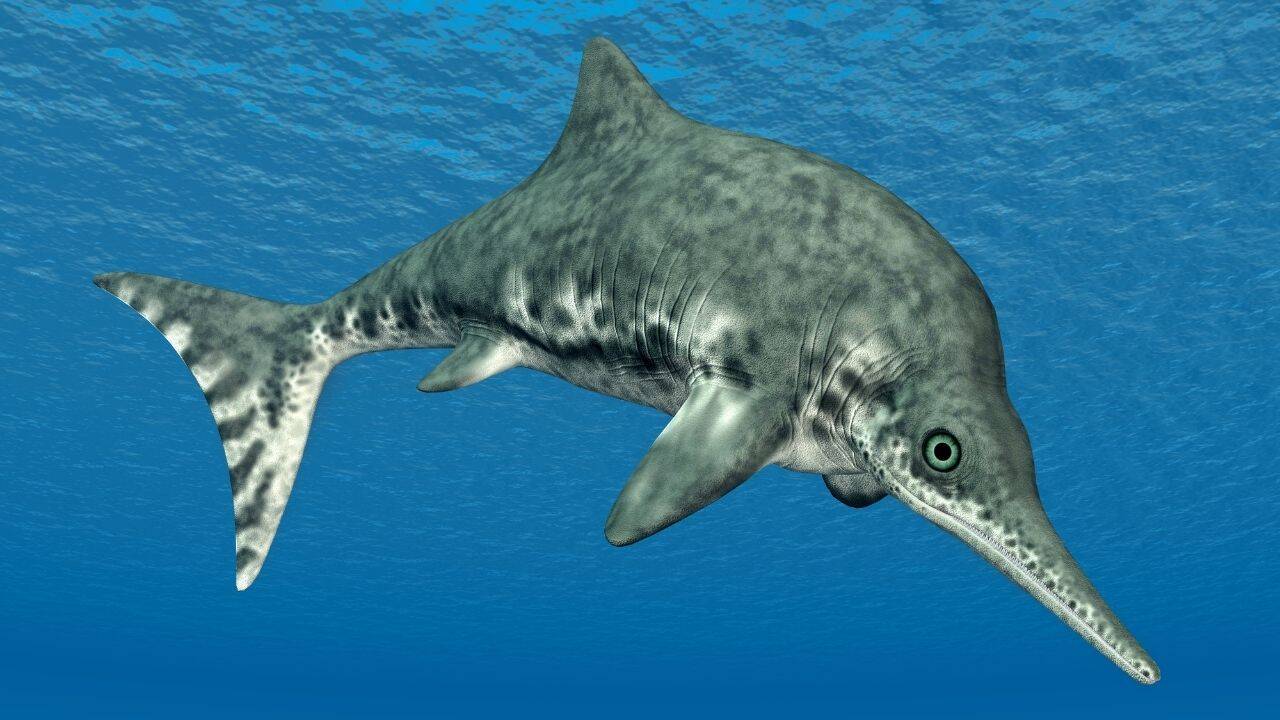
Back in 2019, fossil hunters working near Richmond, Queensland, found a mess of bones packed into the Toolebuc Formation. They nicknamed the specimen "Bag of Bones," or B.O.B. Little did they know, this six-to-seven-meter-long ichthyosaur (Platypterygius australis) had captured a gruesome three-tier food chain frozen in stone. Researchers published the details in the journal Gondwana Research, and the findings completely change how we look at Cretaceous marine ecosystems.
What Was Inside the Ichthyosaur
You don't usually find pristine stomach contents in ancient fossils. Soft tissue rots, scavengers pick things clean, and millions of years of crushing earth turn everything into an unrecognizable sludge. But scientists used advanced neutron tomography and synchrotron X-ray scans to peer inside rock nodules preserved right behind the creature's skull without destroying the fossil itself.
What they found inside the belly of this dolphin-shaped reptile was wild:
- Remains of various bony fish
- Cephalopods, which are ancient relatives of modern squid and cuttlefish
- Fragments of a pterosaur jaw
That last item is a massive deal. It marks the very first direct fossil evidence of an ichthyosaur snacking on a flying reptile. Paleontologists think the marine predator didn't catch the pterosaur mid-air. Instead, it likely ambushed the flying reptile while it was skimming or floating near the surface of the water to hunt for its own food.
When the Hunter Becomes the Snack
If the story ended with a menu of fish, squid, and flying reptile, it would still be a cool discovery. But B.O.B.'s skeleton tells a much darker story.
When the research team, led by Dr. Matt White from the University of New England, looked closer at the bones, they found extensive trauma. We're talking split vertebrae, missing ribs, and massive conical bite marks. These injuries didn't come from normal fossilization or post-mortem settling. Something massive grabbed this 23-foot marine reptile and wrecked it.
The culprit? Kronosaurus queenslandicus.
This absolute unit of a pliosaur could grow past 10 meters long and possessed a massive skull with jaws capable of generating terrifying crushing force. The conical bite marks match a pliosaur's teeth perfectly. Whether the Kronosaurus hunted the ichthyosaur alive or scavenged its carcass shortly after death, the result is the same. The middle manager of the Cretaceous food chain got swallowed by the regional CEO.
Why Non-Destructive Imaging Changes Everything
In the past, studying stomach contents meant physically destroying parts of the fossil or hoping things spilled out naturally. Neutron scans changed the game here. By using particle accelerators and high-powered imaging at facilities like the Australian Nuclear Science and Technology Organisation (ANSTO), scientists can map internal structures down to the millimeter without taking a hammer to history.
This tech lets us reconstruct precise ecological interactions instead of just guessing who ate who based on tooth shapes and general sizes. We get to see exact meals locked inside exact victims, which paints a vivid, messy picture of life in the ancient Eromanga Sea.
Ancient oceans weren't peaceful blue expanses. They were high-stakes survival arenas where flying too close to the water or growing just a bit too confident meant getting turned into fossilized data for scientists 100 million years later.