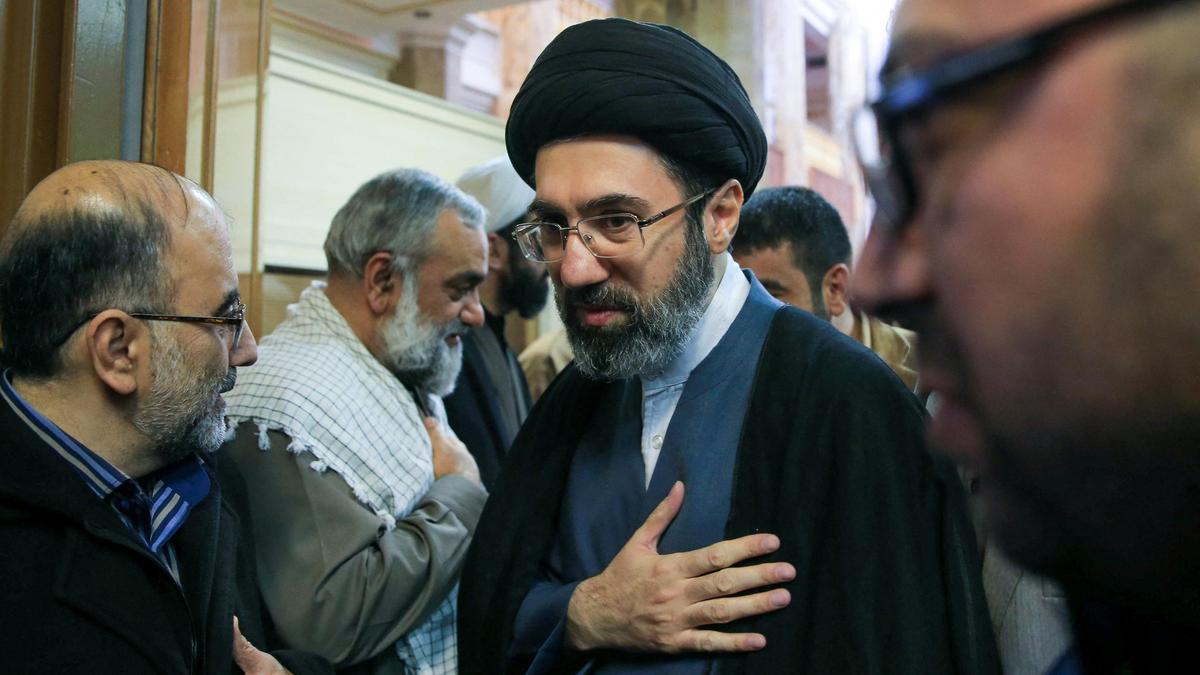
The United States government has just placed a $10 million bounty on a ghost.
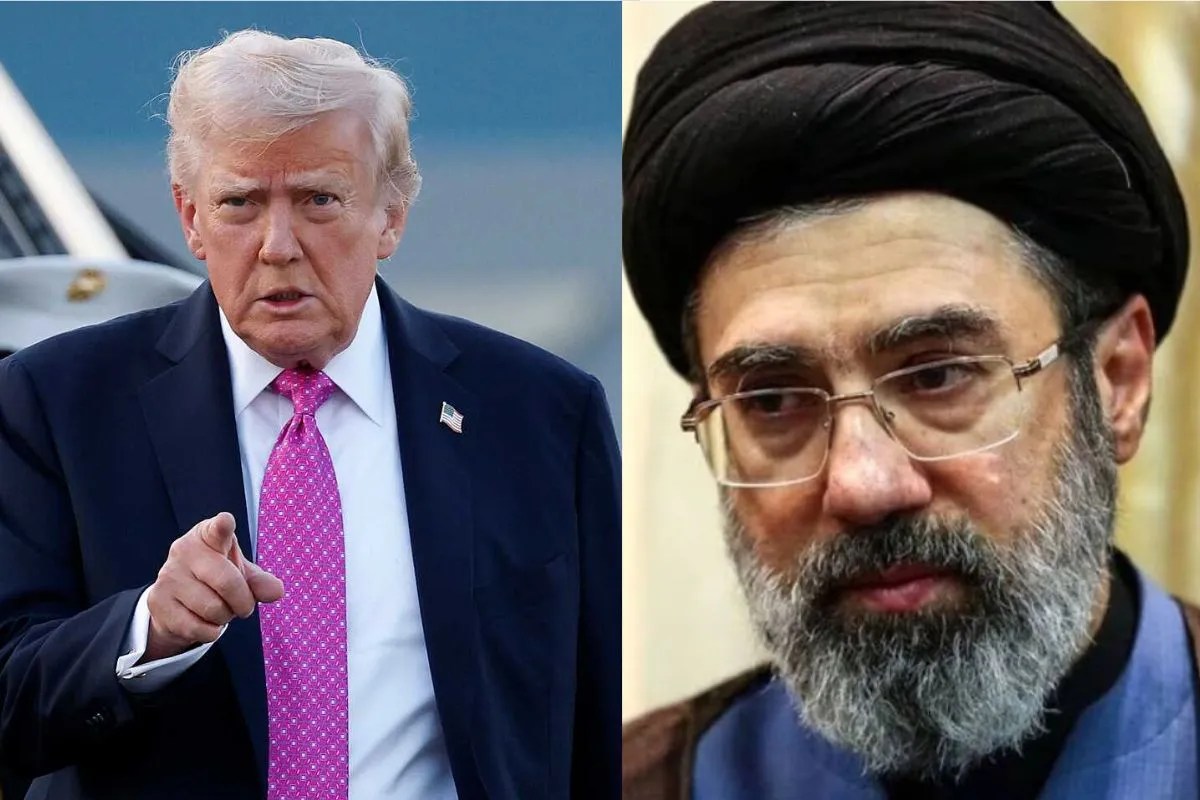
On March 13, 2026, the State Department’s Rewards for Justice program issued a global alert for information leading to the identification or location of Mojtaba Khamenei, the 56-year-old cleric who recently ascended to the role of Supreme Leader. This is not a standard diplomatic move. It is a calculated admission that the intelligence community is flying blind during the most volatile power transition in the Middle East since 1989.
The bounty doesn't just target Mojtaba. It names a "Who's Who" of the Iranian security apparatus, including Ali Asghar Hejazi, the shadowy gatekeeper of the Leader’s office, and Ali Larijani, a political survivor currently serving as a key security advisor. The message is blunt: the U.S. will pay for any shred of data that clarifies the chaos inside Tehran.
The Missing Leader
The urgency behind the $10 million offer stems from a single, glaring fact. Since his father, Ali Khamenei, was killed in the joint U.S.-Israeli airstrikes on February 28, Mojtaba has not been seen in the flesh.
Iranian state media has attempted to project a sense of continuity, airing clips and images of the new leader. However, digital forensic analysts have flagged these as likely AI-augmented composites, splicing old footage with synthetic audio. Even his first official address as Supreme Leader was read by a news anchor rather than delivered by the man himself.
This absence has birthed a frantic intelligence debate. Defense Secretary Pete Hegseth recently claimed that Mojtaba is "wounded" and "likely disfigured," a victim of the same bunker-busting strikes that decapitated the previous leadership. By putting a massive price tag on his location, Washington is betting that someone in the inner circle—distraught by the war or eyeing a way out—will confirm whether the new Supreme Leader is a functioning head of state or a vegetative figurehead.
The IRGC Proxy War for Control
This isn't just a search for a person; it's an investigation into a hostile takeover.
The Islamic Revolutionary Guard Corps (IRGC) reportedly steamrolled the Assembly of Experts to install Mojtaba on March 8. For decades, the IRGC has been the muscle of the regime, but they are now effectively the owners. They view Mojtaba as a necessary bridge—a name that provides religious cover for what is becoming a pure military junta.
The U.S. bounty specifically targets the "command and control" elements of the IRGC. By offering relocation and cash to those who flip, the State Department is attempting to fracture the alliance between the Khamenei family and the generals. The list of targets includes:
- Eskandar Momeni: The Interior Minister tasked with crushing domestic dissent.
- Esmail Khatib: The Intelligence Minister currently overseeing the hunt for "infiltrators."
- Yahya Rahim Safavi: A veteran military advisor who links the old guard to the new.
Tor, Signal, and the Shadow War
The delivery mechanism of this bounty is as telling as the price. The State Department isn't asking for phone calls; they are directing tipsters to Tor-based portals and encrypted messaging apps.
This reflects the reality of 2026. Tehran has implemented a near-total digital blackout, using sophisticated Chinese-style filtering to monitor any outbound data. The U.S. is essentially inviting Iranian officials to engage in high-stakes cyber-espionage against their own government.
For a mid-level IRGC officer or a technician in the "Beit-e Rahbari" (the Leader's House), $10 million is more than just life-changing money. It is a ticket out of a country that is currently being squeezed by a "maximum pressure" campaign that has moved beyond sanctions into active, kinetic warfare.
The Dynasty Dilemma
The elevation of Mojtaba Khamenei is a profound irony for a regime born of a revolution against hereditary monarchy. By picking the son to follow the father, the Islamic Republic has abandoned its claim to be a unique Islamic democracy, reverting instead to a traditional Middle Eastern autocracy.
This loss of ideological legitimacy is a vulnerability the U.S. intends to exploit. If the "Leader" is truly incapacitated or hiding in a bunker while the country burns, the narrative of his divine right to rule collapses. The bounty is a spotlight designed to force him out of the shadows.
Washington's gamble is that the price of loyalty is lower than the price of the information. In a city where the air is thick with the smell of smoke and the sound of drones, $10 million buys a lot of truth. The question is whether anyone will live long enough to collect it.
Would you like me to analyze the specific IRGC factions that are most likely to provide a defector under this new reward program?